
Wild garlic has arrived! Wild garlic, also known as ramson or bear's garlic (Allium ursinum, 'karulauk' in Estonian), is a very close relative to the wild leek aka ramp (Allium tricoccum, 'grislilauk' in Estonian). I've been eagerly waiting for this spring green, as I love both the flavour and the versatily of it, and it's a good health-booster at this time of the year. Well, if it's good enough for big brown bears, it's good enough for us :D
Although I've been happily making a wild garlic pesto with pinenuts for a few years now, this one is a new favourite. There's more flavour, and somehow it's much more gutsier than the 'regular' wild garlic pesto. The idea to use almonds instead of pinenuts in a wild garlic pesto is from a German food magazine (aitäh, Kiilike, et tähelepanu retseptile juhtisid!). I've upped the amount of almonds and cheese, and used regular almonds instead of blanched.
Let me tell you - this was a huge hit at my recent birthday brunch, where the guests were spreading it on thin slices of ciabatta. I'm heading to my secret wild garlic field later today, just so I could make this one again :)
You could definitely try this with ramps or even with garlic scapes. If you love garlic, you'll love this, I promise!
Other recipes using wild garlic/ramson @ Nami-Nami:
Wild garlic tzatziki
Wild garlic and potato mash
Wild garlic butter
Wild garlic pesto (with pinenuts)
Stuffed tomatoes with wild garlic salad
Wild garlic pesto / Ramson pesto
(Karulaugupesto mandlitega)
Makes about 200 ml

a good bunch of wild garlic (about 125 g), rinsed and drained
50 g Parmesan cheese, roughly chopped
50 g whole almonds
75 ml (5 Tbsp) extra virgin olive oil
sea salt and freshly ground black pepper
Place almonds and cheese into a food processor and blitz into fine crumbs. Add wild garlic, process again until you've got a coarse pesto. Now add the oil little by little, with the machine still running.
Season with salt and pepper.
If you want to keep your pesto for a few weeks, then place into cool sterilised jars and pour a layer of olive oil on top. Keep in the fridge.


Vitello tonnato is a popular summer-time dish in Italy, originating in the 19th century Piedmont. Cold thin slices of cooked veal are topped with a creamy tuna and anchovy dressing. I love the classic version a lot, but the tuna mayonnaise is much more versatile. It's been a frequent visitor in our kitchen this spring, and I've given below the recipe I've come to love. I especially like it on top of crisp crostini slices, but it's also a good dressing for some left-over boiled eggs.
What's your favourite tonnato recipe and dish?
Crostini with tuna mayonnaise, garnished with caperberries (Suupisted tuunikalamajoneesiga):

Vitello tonnato aka cold veal slices with tuna mayonnaise (Vasikalihalõigud tuunikalamajoneesiga). That's the classic way of serving tonnato:

Uova tonnata or boiled eggs with tuna mayonnaise, garnished with some capers and lemon zest (Munad tuunikalamajoneesiga):

Tonnato aka Italian tuna mayonnaise
Serves 4
Note that I make my tonnato from scratch and not cheating by simply mixing mayonnaise with canned tuna :)

2 large egg yolks, at room temperature
2 anchovy fillets in oiled
juice of half or whole lemon
10 salted capers, rinsed and drained
1 shallot, finely chopped
freshly ground black pepper
150-200 ml mild olive oil
200 g good-quality tuna chunks in oil
Place egg yolks, capers, anchovy fillets, juice of half a lemon, chopped shallot and some black pepper into the bowl of a hand-held blender. Blend until you've got a thick paste of uniform consistency.
Add oil in a thin stream, still blending the mixture.
Finally add the tuna chunks and blitz a little bit more.
Taste for seasoning - add more pepper, lemon juice or perhaps salt.

A super-quick last-minute dip idea that I make quite often. I love this one especially with nachos, though it also works well spread over crostini, especially those bite-sized onesd. However, I would only make it at the very last moment, as despite the addition of lime juice, this dip tends to turn from lovely green to not-so-lovely brown rather quickly.
Avocado and Blue Cheese Dip
(Avokaado-sinihallitusjuustudipp)
Serves 4-6
75 grams blue cheese (I like Valio Aura)
4 Tbsp sour cream/creme fraiche/yogurt
2 ripe avocados
3 Tbsp finely chopped fresh (flat-leaf) parsley
2 Tbsp lime juice
freshly ground black pepper
sea salt
Smash the blue cheese with a fork, mix with sour cream until combined.
Halve the avocados, remove the stones. Scoop out the avocado flesh and smash with a fork. Stir into the blue cheese mixture.
Add the chopped parsley, season with salt, pepper and lime juice.
Serve at once.
What would I do without you, other foodbloggers?? You are a constant source of fantastic inspiration, and here's just a snapshot of dishes I've tried lately.
David Lebovitz's fantastic Fresh Apricot Ice Cream (especially if you've got some lovely French apricots from the market). MattBites kindly provides the recipe. I had no almond extract at home, so used 2 tsp of Amaretto instead. Lovely..

David Lebovitzi aprikoosijäätis
Oh, and while you're at it - his Strawberry Sour Cream Ice Cream is pretty delicious as well (Dagmar has the recipe). I made it quite a few times this summer, and my Estonian friends say the recipe works with bilberries, too:

Maasika-hapukoorejäätis
Elise's Tuscan Scrambled Eggs made a great light supper, and we'll be making it again soon:

Toskaana munahüüve
I really enjoyed Patricia's Crash-Hot Potatoes (see also Wendy's version):

Krõbedad purustatud kartulid
And while we're at it, here are couple of really-really-really tasty dishes Ximena made us when we were visiting her and her husband J. in Madrid in April. First off, Ferrán Adrià´s bag-of-chips tortilla was both genius and tasty:

Ximena kartulikrõpsutortilja
Similarly, Ximena's salmorejo is so worth making with some ripe summer tomatoes:

Salmorejo - Hispaania tomatidipp
And last, but by no means least, my friend Alanna in St Louis makes a great Classic Seven-Layer Salad:

Thank you, everybody!!
David Lebovitz's fantastic Fresh Apricot Ice Cream (especially if you've got some lovely French apricots from the market). MattBites kindly provides the recipe. I had no almond extract at home, so used 2 tsp of Amaretto instead. Lovely..

David Lebovitzi aprikoosijäätis
Oh, and while you're at it - his Strawberry Sour Cream Ice Cream is pretty delicious as well (Dagmar has the recipe). I made it quite a few times this summer, and my Estonian friends say the recipe works with bilberries, too:

Maasika-hapukoorejäätis
Elise's Tuscan Scrambled Eggs made a great light supper, and we'll be making it again soon:

Toskaana munahüüve
I really enjoyed Patricia's Crash-Hot Potatoes (see also Wendy's version):

Krõbedad purustatud kartulid
And while we're at it, here are couple of really-really-really tasty dishes Ximena made us when we were visiting her and her husband J. in Madrid in April. First off, Ferrán Adrià´s bag-of-chips tortilla was both genius and tasty:

Ximena kartulikrõpsutortilja
Similarly, Ximena's salmorejo is so worth making with some ripe summer tomatoes:

Salmorejo - Hispaania tomatidipp
And last, but by no means least, my friend Alanna in St Louis makes a great Classic Seven-Layer Salad:

Thank you, everybody!!

Wild garlic season is almost over, but I wanted to share another simple recipe for that wild plant. Need something zesty on your grilled steak? Want to lend garlicky flavour to your steamed spring vegetables? Fancy some toasted garlic (rye) bread?
Well, what about this wild garlic butter?
Wild Garlic Butter
(Karulauguvõi)
Yields 150 g
150 g butter, at room temperature
30 g wild garlic (about 20 leaves)
grated zest of 1 lemon
a generous pinch of Maldon sea salt
Wash and dry the wild garlic leaves, then chop very finely. Mix with soft butter and grated lemon zest, until combined. Season with salt.
Keeps in the fridge for a few days (can be successfully frozen).

It's the brief season for wild garlic (aka ramsons or bear's garlic, Allium ursinum), and I'm excited. I only discovered wild garlic a year ago (see post here), and have been looking forward to them again.
There's a plentiful supply of wild garlic near our house, and early last week I picked some* to make some wild garlic recipes I had spotted elsewhere or 'created' myself. So far I've made the same cucumber and wild garlic salad mentioned last year; a delicious cold tzatziki sauce (wild garlic, cucumber, sour cream, salt); one cold sauce to accompany simple boiled potatoes (wild garlic, cornichons, kefir milk); and this delicious pesto recipe.
The idea behind the pesto is simple. If your usual Pesto Genovese is basil + garlic + parmesan cheese + pine nuts, then instead of basil and garlic I decided to use mild-tasting wild garlic instead. It was a very successful substitution indeed, and I'll be certainly making it again next year.
Have you tried wild garlic before? And what's your favourite use for this delicious wild food?
* Karulauk on Eestis III kategooria kaitsealune taim. Karulaugu korjamine isiklikuks kasutamiseks määral, mis ei ohusta liigi säilimist antud elupaigas, on lubatud; rangelt on keelatud looduslikust kasvukohast korjatud karulauguga kauplemine.
Wild Garlic Pesto
(Karulaugupesto)
Makes 200 ml

100 g wild garlic, rinsed, drained and chopped
50 g toasted pine nuts
150 ml extra virgin olive oil
50 g parmesan cheese, grated
Maldon sea salt, to taste
Place chopped wild garlic and toasted pine nuts into a blender, add about 1/3 of the olive oil and puree until smooth. Stir in the rest of the oil and the grated cheese, season to taste with salt.
Serve with pasta (see above) or stir into your risotto. Keeps covered in the fridge for about a week.
* Toasting pine nuts: heat pinenuts of a hot dry frying pan for a few minutes, shaking the pan regularly, until the nuts are golden brown and aromatic. Cool before use.
WHB: This is also my entry to the Weekend Herb Blogging, this time hosted by Anh of Food Lover's Journey. Click on the logo below for more information about this foodblogging event started by Kalyn.


In early January I got an e-mail from one of the editors of Oma Maitse, the biggest-selling Estonian food magazine, asking me if they could visit me and write an article for their February issue about my food-centred life they've been following through my blog and Estonian-language site. I spoke with K, and considering that we were just about to re-launch the Estonian site, we thought a little extra publicity cannot be bad, so one Thursday afternoon the journalist Katrin Kurss and the photographer Ülle Viska popped by for a few hours chatting, eating and photoshooting with me and K. We served them a range of our favourite light dishes - eight in total - that were all pictured in the February issue, though they only had space for five of the recipes. The resulting article was called "Peediprintsessi moodsad palad" or "Beetroot Princess's Modern Bites" and the five-page spread was accompanied by a full-page photo of moi :)
The menu was following:
Molly's bouchons au thon (adapted over the last year, when I've made them on a monthly basis; recipe provided)
My small beetroot & blue cheese tartlets (recipe provided)
Beetroot houmus (recipe provided)
My kama and mascarpone 'truffles' (recipe provided)
K's beautiful cannéles (recipe provided)
My simple matcha tea loaf (served with K's mum's cloudberry compote - seen on the photo above)
My sea-buckthorn sorbet, using berries from my grandmother's garden
Piña Colada Espuma, just for that little bit of fun
Here's a recipe for the beetroot houmus. If you love beets, you'll adore this. If you like chickpeas and houmus, you'll love this. And if you fancy both, you'll be in seventh heaven. Excellent as a dip with vegetable sticks, or as a spread on some lightly toasted dark rye bread. And just look at that amazing colour!!
Beetroot Houmus
(Peedi-kikerhernehummus)
Serves 6-8 as a dip

2 to medium sized beets, cooked or roasted
a 400 g can of cooked chickpeas/garbanzo beans
1-2 garlic cloves, peeled and minced
3-4 Tbsp extra virgin olive oil
1 tsp cumin seeds
about 2 Tbsp lemon juice, freshly squeezed
0.5 tsp salt
freshly ground black pepper
Toast the cumin seeds on a dry pan for a few moments to release the aromas, then crush in a pestle and mortar.
Peel the beetroot and cut into smaller chunks.
Rinse and drain the chickpeas.
Puree the beets and chickpeas in a food processor (I used the grinder attachment of my KitchenAid Mixer).
Add minced garlic, cumin seeds, olive oil, lemon juice, salt and pepper. If the mixture is too thick, then add some boiled water to lighten it. Taste for seasoning again and serve.
PS! The garlic flavour intensifies a lot when the houmus is allowed to stand for a while, so we wouldn't recommend more than these 1-2 cloves.
The eGullet Society for Culinary Arts and Letters, or eGullet for short, as some of you may know, is a huge online food forum with thousands of members. I've been a member since February 2006, and although my main food-related online presence is certainly here on Nami-nami, I do use eGullet quite frequently. It's a great source of food-related information and inspiration, though the style and format are very different from foodblogging as we know. Every now and then the hosts of the forum ask one of their members to do a week-long foodblog, where an eGulleteer keeps a picture diary about shopping for food, preparing food, and eating food, with various tidbits about life and food in general thrown in. Well, I had a chance to do one of those eG foodblogs last week, which was fun, if a bit exhausting (I hardly had time to spend with this foodblog!) On the first day, one of the readers asked me if I could cook any exotic meat a la caribou and such like. I jokingly replied that we only eat pork, beef, veal, rabbit/hare, wild boar, venison, elk and brown bear* in Estonia, and none of them qualifies as exotic :) So I decided to go with an unusual cut of meat instead, and do something Estonian with it, and that's how I ended up making an Estonian beef liver gravy, maksakaste.
Beef liver gravy, Estonian style
(Maksakaste)
Adapted from Eesti Köök/Estonian Cooking (2003)

500 grams beef liver, cut into thin long strips (1 cm x 4-5 cm)
2 Tbsp plain/all-purpose flour
1 tsp black pepper
2-3 Tbsp oil
1 onion, finely chopped
200 ml cold water
100 ml sour cream
salt
fresh dill
To serve:
boiled potatoes
fresh dill, finely chopped
salted cucumbers, sliced
Mix flour with pepper.
Cut liver into thin strips**, drench in flour/pepper mix.
Heat oil in a frying pan, add liver and onion and brown on low heat.
Add any leftover flour, add cold water and heat, stirring regularly, until the sauce thickens. Simmer for 5-7 minutes.
Add sour cream, stirring regularly, and simmer on a low heat for another 5 minutes.
Season with salt, garnish with dill.
Serve with boiled potatoes and sliced salted cucumbers.
* I am not claiming that I have tried all those various meats, nor that they're all eaten regularly in Estonia.
** Click here to see a photo with step-by-step instructions.
Beef liver gravy, Estonian style
(Maksakaste)
Adapted from Eesti Köök/Estonian Cooking (2003)

500 grams beef liver, cut into thin long strips (1 cm x 4-5 cm)
2 Tbsp plain/all-purpose flour
1 tsp black pepper
2-3 Tbsp oil
1 onion, finely chopped
200 ml cold water
100 ml sour cream
salt
fresh dill
To serve:
boiled potatoes
fresh dill, finely chopped
salted cucumbers, sliced
Mix flour with pepper.
Cut liver into thin strips**, drench in flour/pepper mix.
Heat oil in a frying pan, add liver and onion and brown on low heat.
Add any leftover flour, add cold water and heat, stirring regularly, until the sauce thickens. Simmer for 5-7 minutes.
Add sour cream, stirring regularly, and simmer on a low heat for another 5 minutes.
Season with salt, garnish with dill.
Serve with boiled potatoes and sliced salted cucumbers.
* I am not claiming that I have tried all those various meats, nor that they're all eaten regularly in Estonia.
** Click here to see a photo with step-by-step instructions.

If there's somebody who is into beetroot as much as I am, then it's Alanna of A Veggie Venture blog. Alanna has got an impressive 41 beetroot posts on her blog already, which is way more than I've got (11 at the last count). But then, you see, Alanna has been blogging for 2,5 months more than I have, so I've still got time to catch up :) Another fellow beetroot admirer is Bea of La Tartine Gourmande, who's also got 11 beetroot recipes on her blog. If there was a Beetroot Appreciation Society, then we three should be honorary members from the beginning. (If you'd like to join, then give us a shout - we'll consider everybody's beetroot credentials!)
Last month Alanna posted a recipe for beetroot pesto that I adapted for last week's movie night. I had lots of leftover odd beetroot pieces after making those cute beetroot and blue cheese mini tartlets, so this recipe was brilliant. It was a tasty and gutsy and hearty vegetable dip that was very well received, especially by my dear friend Kadri, so this post is dedicated for her :)
And thank you, Alanna, for another keeper beetroot recipe!!
Beetroot Pesto
(Peedipesto)
Makes about 1,5 cups

(Photo updated in September 2008)
500 grams roasted beetroot , peeled
2 fat garlic cloves, peeled
a small bunch of fresh coriander/cilantro
50 grams pinenuts, toasted
1 Tbsp sherry vinegar
2-3 Tbsp olive oil
grated parmesan cheese, optional
sea salt
Grind beetroot, garlic, toasted pinenuts and coriander in a food processor (I used my Kitchen Aid's food grinder) until you've got a coarse puree. Add some olive oil for a smoother texture, and grated parmesan cheese, if you wish. Season with salt and vinegar.
Use as a side salad (middle photo), spread of toasted rye bread (below) or stir into cooked pasta (above photo). Although I liked all the uses, the pasta sauce was my favourite - it coloured the pasta instantly into a beautiful shade of beetroot purple, and certainly brightened up simple boiled farfalle that night.
Keeps well for a few days in the fridge, covered.

BLAST FROM THE PAST
A year ago I made Johanna's wonderful cantucci with almonds, ginger and pink peppercorns. I think it's about time I made them again :)
UPDATE 10.8.2007 - you can read Andrew's saucy sauce round-up here.
For the seventh (already??) installment of Waiter, there is something in my ... foodblogging event, Andrew has chosen SAUCE as the theme. And there's a catch, you see. Andrew wrote:
"A wide open theme I hope you agree. Plenty of room for experimentation, family favourites and the tried and tested. You can use fruit. You can use meat. You can serve it over meringue or pasta or even splash it over a chunk of juicy steak. They can be tart and fruity or mellow and creamy. It can be ethnically Estonian or lip-smackingly Kiwi; 'Sauces' - versatile and delicious. What can you come up with?"
You see, he has specifically mentioned that the sauce can be ethnically Estonian. How could I be expected to make anything else then? I mean, coming up with a delicious Caribbean rum sauce or a classic French velouté would be bound to disappoint Andrew, don't you think? I therefore present you with a truly 'ethnically Estonian sauce' - munakaste. Munakaste translates egg sauce, it reminds me of very smooth and fluffy scrambled eggs. It is usually served with boiled new potatoes and rye bread. Although I remember eating it a lot as a kid, there has been a certain absence of it from my kitchen for the last few (oh well, maybe even ten?) years. And suddenly, out of the blue, I had started developing cravings for this eggy sauce. In mid-June I had some delicious munakaste at my high-school reunion weekend away (15 years!?), and when I saw Andrew's WTISIM call, I knew this is gonna be my entry.
Easier said than done. I couldn't find a suitable recipe for Estonian egg sauce it in any of my cookbooks - and there's many of them! I guess a sauce consisting off eggs & smoked greasy bacon isn't trendy at the moment, and it clashes with some healthy eating guidelines (one recipe for munakaste stated that 'obviously modern women use oil as a basis of the sauce and not smoked fatty ham', which totally misses the point, as it's the smoked ham that gives a wonderful flavour to the sauce). Eventually I called my maternal grandma Senta, who at the respectable age of 86 is a living proof that a diet consisting of frequent munakaste cannot be too bad for you (at least when combined with hard farm labour). This is her version, and mine from now on.
And I hope it's ethnically Estonian enough for Andrew :-)
My grandma Senta's egg & smoked ham sauce
(Munakaste)
Serves 2

1 heaped Tbsp plain flour
2 large eggs
300 ml milk
a pinch of salt
200 grams smoked & salted ham (see here), cut into small cubes
1 medium onion, finely chopped
chopped scallions/green onions
In a small bowl, whisk eggs and flour into a paste. Then add milk, little by little, whisking all the time. Season with salt.
Heat a frying pan or a small non-stick saucepan on a medium-high heat and add the cubed ham. Fry, stirring regularly, for about 5 minutes, until the ham starts to brown and release plenty of grease. Now reduce the heat to medium, add the onions and saute them with ham cubes for about 5 minutes.
Now pour the egg and milk mixture into the saucepan and start stirring the sauce with a wooden spoon, waiting for the sauce to thicken - this could take up to five minutes. It's important to stir all the time, or you'll end up with scrambled eggs, which isn't the same thing at all!
When ready to serve, sprinkle with chopped green onions.
And serve with boiled new potatoes and rye bread, as I said above.
Here are links to my previous Waiter there is something in my ... entries:
June 2007 (DUMPLINGS): Vareniki dumplings with curd cheese filling, served with home-made apricot jam & pistachios.
May 2007 (STUFFED VEGETABLES): Stuffed tomatoes with two types of salad - cod liver salad & cucumber and wild garlic salad.
April 2007 (BREAD): a traditional Estonian quick mushroom bread, Seenekarask.
March 2007 (EASTER BASKET): a selection of various Easter delights.
February 2007 (PIE): a great Russian puff pastry and fish pie, Salmon Kulebyaka.
January 2007 (STEW): my version (in collaboration with Anthony Bourdain:) of the French classic Boeuf Bourguignon.
BLAST FROM THE PAST
Two years ago I wrote about an essential Scottish dessert - Cranachan. Considering that raspberries are in season at the moment in many parts of the world, then this recipe is definitely worth checking out! And who wouldn't like a combination of raspberries, cream and whisky? There's even a delicious porridge version of Cranachan.
For the seventh (already??) installment of Waiter, there is something in my ... foodblogging event, Andrew has chosen SAUCE as the theme. And there's a catch, you see. Andrew wrote:
"A wide open theme I hope you agree. Plenty of room for experimentation, family favourites and the tried and tested. You can use fruit. You can use meat. You can serve it over meringue or pasta or even splash it over a chunk of juicy steak. They can be tart and fruity or mellow and creamy. It can be ethnically Estonian or lip-smackingly Kiwi; 'Sauces' - versatile and delicious. What can you come up with?"
You see, he has specifically mentioned that the sauce can be ethnically Estonian. How could I be expected to make anything else then? I mean, coming up with a delicious Caribbean rum sauce or a classic French velouté would be bound to disappoint Andrew, don't you think? I therefore present you with a truly 'ethnically Estonian sauce' - munakaste. Munakaste translates egg sauce, it reminds me of very smooth and fluffy scrambled eggs. It is usually served with boiled new potatoes and rye bread. Although I remember eating it a lot as a kid, there has been a certain absence of it from my kitchen for the last few (oh well, maybe even ten?) years. And suddenly, out of the blue, I had started developing cravings for this eggy sauce. In mid-June I had some delicious munakaste at my high-school reunion weekend away (15 years!?), and when I saw Andrew's WTISIM call, I knew this is gonna be my entry.
Easier said than done. I couldn't find a suitable recipe for Estonian egg sauce it in any of my cookbooks - and there's many of them! I guess a sauce consisting off eggs & smoked greasy bacon isn't trendy at the moment, and it clashes with some healthy eating guidelines (one recipe for munakaste stated that 'obviously modern women use oil as a basis of the sauce and not smoked fatty ham', which totally misses the point, as it's the smoked ham that gives a wonderful flavour to the sauce). Eventually I called my maternal grandma Senta, who at the respectable age of 86 is a living proof that a diet consisting of frequent munakaste cannot be too bad for you (at least when combined with hard farm labour). This is her version, and mine from now on.
And I hope it's ethnically Estonian enough for Andrew :-)
My grandma Senta's egg & smoked ham sauce
(Munakaste)
Serves 2

1 heaped Tbsp plain flour
2 large eggs
300 ml milk
a pinch of salt
200 grams smoked & salted ham (see here), cut into small cubes
1 medium onion, finely chopped
chopped scallions/green onions
In a small bowl, whisk eggs and flour into a paste. Then add milk, little by little, whisking all the time. Season with salt.
Heat a frying pan or a small non-stick saucepan on a medium-high heat and add the cubed ham. Fry, stirring regularly, for about 5 minutes, until the ham starts to brown and release plenty of grease. Now reduce the heat to medium, add the onions and saute them with ham cubes for about 5 minutes.
Now pour the egg and milk mixture into the saucepan and start stirring the sauce with a wooden spoon, waiting for the sauce to thicken - this could take up to five minutes. It's important to stir all the time, or you'll end up with scrambled eggs, which isn't the same thing at all!
When ready to serve, sprinkle with chopped green onions.
And serve with boiled new potatoes and rye bread, as I said above.
Here are links to my previous Waiter there is something in my ... entries:
June 2007 (DUMPLINGS): Vareniki dumplings with curd cheese filling, served with home-made apricot jam & pistachios.
May 2007 (STUFFED VEGETABLES): Stuffed tomatoes with two types of salad - cod liver salad & cucumber and wild garlic salad.
April 2007 (BREAD): a traditional Estonian quick mushroom bread, Seenekarask.
March 2007 (EASTER BASKET): a selection of various Easter delights.
February 2007 (PIE): a great Russian puff pastry and fish pie, Salmon Kulebyaka.
January 2007 (STEW): my version (in collaboration with Anthony Bourdain:) of the French classic Boeuf Bourguignon.
BLAST FROM THE PAST
Two years ago I wrote about an essential Scottish dessert - Cranachan. Considering that raspberries are in season at the moment in many parts of the world, then this recipe is definitely worth checking out! And who wouldn't like a combination of raspberries, cream and whisky? There's even a delicious porridge version of Cranachan.
A starter from a dinner party some 10 days ago. A smoked salmond spread/pâté that preceded a wonderful boeuf bourguignon and delicious risalamande. On the photo below you can see it being served alongside the first - and rather good - local Estonian blue cheese, Breti Blue, some rocket leaves and crostini.
Can be eaten standing up around the table (read: perfect for cocktail parties and such like).
Smoked salmon spread
Adapted from Rachel Allen's Rachel's Favourite Food for Friends (2005)
Serves 10
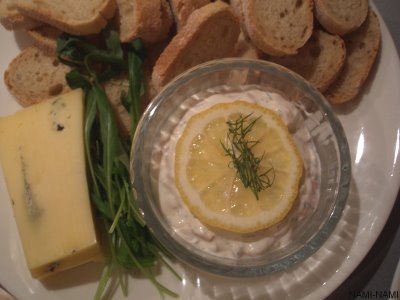
100 grams ('cold') smoked salmon
100 grams cream cheese
100 grams sour cream/creme fraiche
about a tablespoonful of lemon juice
couple of spoonfuls of finely chopped dill
freshly ground black pepper
Maldon sea salt
Chop the smoked salmon finely, mix with cream cheese and sour cream. Season with lemon juice, dill, salt & pepper.
Serve.
Easy-peasy, I know.
UPDATE 14.1.2007: "Elust siin ja seal" also made this simple salmon spread and liked it!
Can be eaten standing up around the table (read: perfect for cocktail parties and such like).
Smoked salmon spread
Adapted from Rachel Allen's Rachel's Favourite Food for Friends (2005)
Serves 10
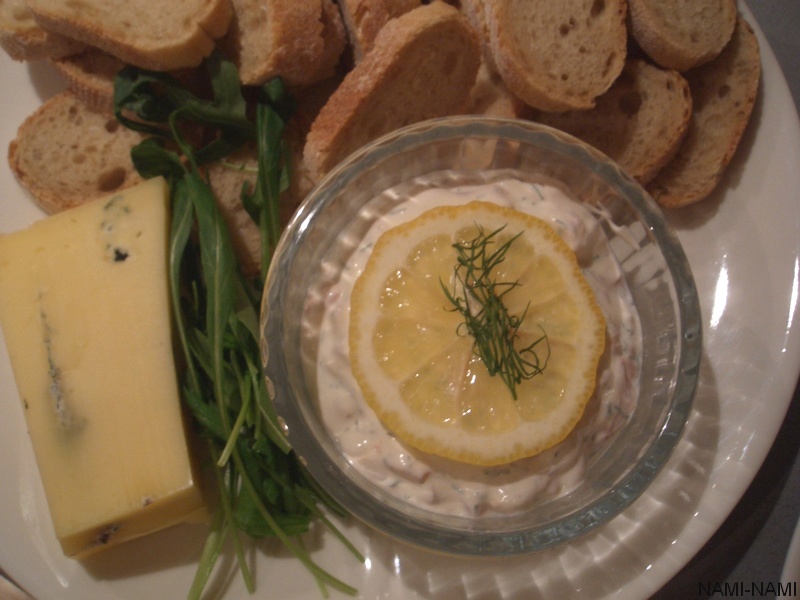
100 grams ('cold') smoked salmon
100 grams cream cheese
100 grams sour cream/creme fraiche
about a tablespoonful of lemon juice
couple of spoonfuls of finely chopped dill
freshly ground black pepper
Maldon sea salt
Chop the smoked salmon finely, mix with cream cheese and sour cream. Season with lemon juice, dill, salt & pepper.
Serve.
Easy-peasy, I know.
UPDATE 14.1.2007: "Elust siin ja seal" also made this simple salmon spread and liked it!
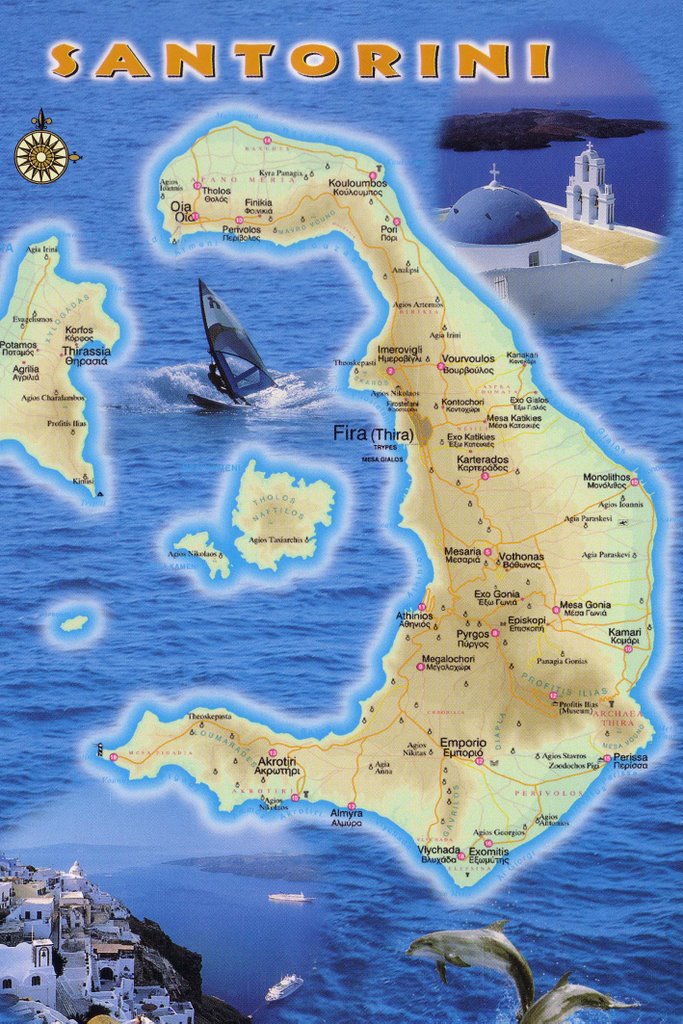 After 2 days in burningly hot Athens back in July 2002, I finally caught an overnight ferry from Piraeus to Santorini to spend almost a week on the island. Having been born and bred up in the North, I found the scorching 'n' bright Greek sun very difficult to deal with. But what can you do, life as an academic can be tough, and conferences need to be attended, papers need to be given :-)
To compensate, I relaxed on the beach in the evenings and familiarised myself with various delicacies on offer. And Santorini has many. The fertile volcanic soil grows wonderful aromatic tomatina or tiny cherry tomatoes which are renown for their distinct flavour. They often find their way into tomatokeftedes or meatless ‘meat balls’, made with tomatoes, herbs and butter and no meat. One can also find small white eggplants on the island, known as the apple of love. Santorini has also got some distinct desserts, among them koufeto – a spoonsweet prepared with honey-soaked almonds and is served at weddings, and melitinia cheese pies popular during Easter.
I must admit though, that I found it very difficult to eat anything in the scorching 40˚Celsius, and survived mainly on water and frappes during the day, and modest amounts of food in the evenings. Luckily, I will have another chance this summer to enjoy these culinary gems, as some Edinburgh friends are getting married on the island at the end of June. I will make an effort to chase down some Chloro fresh cheese and to sample some Santorinian wines. Meanwhile, I satisfy my craving for sun and sea with some fava spread. Fava is a puree made with special fava lentils native to the island. If you cannot get hold of them, then dried yellow split peas come closest, and I’ve used them for the recipe below. Note that Greek fava is distinct from a Turkish dish with a similar name. Whereas the Greek fava is often served lukewarm as a main dish or light meal, then the Turks prefer it cold as part of a meze table, and it is made of fava broad beans - and not lentils - there (I owe it to Tülin of the Domestic Cat for pointing this important difference out to me, she also provides recipe for the Turkish fava).
Santorini fava puré
(Santorini hernepüree)
Makes two bowlfuls

500 grams dried Santorini fava lentils or small yellow split peas
water
2 medium onions -quarter one, chop the other finely
125 ml extra virgin olive oil, preferably Greek
salt
crushed black pepper
a generous handful of finely chopped flat leaf parsley
one lemon
Rinse the split peas under running cold water, put into a large saucepan and cover with double the amount of fresh cold water. Bring slowly to the boil, removing any impurities and foam that occur.
Add the onion quarters, a pinch of salt and half of the olive oil. Simmer on a low heat for 40-60 minutes, until the peas have softened and become mushy.
Push the peas through a fine sieve or purée with a blender.
Add the rest of the olive oil, lemon juice, minced onion, chopped parsley and season to taste with salt and pepper. Stir and serve.
Fava is great as a small meal with some crusty bread, or as a dip for vegetables.

It's not every day that a girl gets to celebrate her 25th birthday all over again, so I had a small party at my place on April 24th. I only decided that I'm not too old to make a bit of fuss about my birthday a few days earlier, but despite the rather short notice, a very impressive 22 friends turned up. I had fantastic time, got lots of flowers (including a very special bunch delivered very early in the morning by a courier;), lots of chocolates to satisfy my chocoholism, and some lovely presents. Thank you all who came by, emailed/called/texted me or left birthday wishes on my blog..
Here's what my friends were nibbling while drinking bubbly and chatting away:
* Grissini sticks wrapped in paper-thin prosciutto slices
* Crostini with pesto (spread on crostini before they are put in the oven)
* Crostini with a salad of salted Estonian chantarelle mushrooms (yum!), minced shallots and sour cream
* Carrot sticks with hummus
* Salmon and cream cheese canapés that I tested just few days earlier.
* Crostini with goat's cheese, smoked salmon and parsley (below)
And then there was the mocca and almond cake, obviously. Devoured in an instant:)
Smoked salmon pâté
(Suitsulõhepasteet)

This simple but gutsy spread was inspired by a recipe in Rachel's Favourite Food for Friends. I replaced crème fraîche with sour cream and used goat's cheese instead of cream cheese. I'm not a great friend of fennel either (although I love dill), so my pâté had parsley in it. As it can be made up to a week in advance, it's great for parties.
100 grams of organic smoked salmon
50 grams Welsh soft goat's cheese
100 ml sour cream
a handful of parsley
sea salt
crushed black pepper
a squeeze of lemon juice.
Whiz up chopped salmon, goat's cheese, sour cream and parsley in a food processor. Season with salt and pepper and refresh with a squeeze of lemon juice.
Spread on crostini or crackers and garnish with some parsley.
For more great finger food ideas, check out this recent post by Angelika of the Flying Apple and all those fabulous canapé recipes by Johanna of the Passionate Cook.
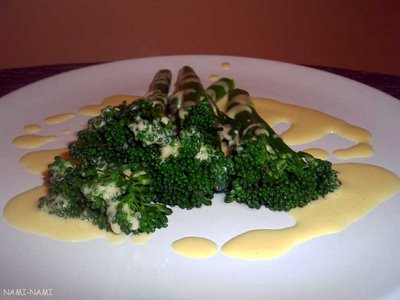
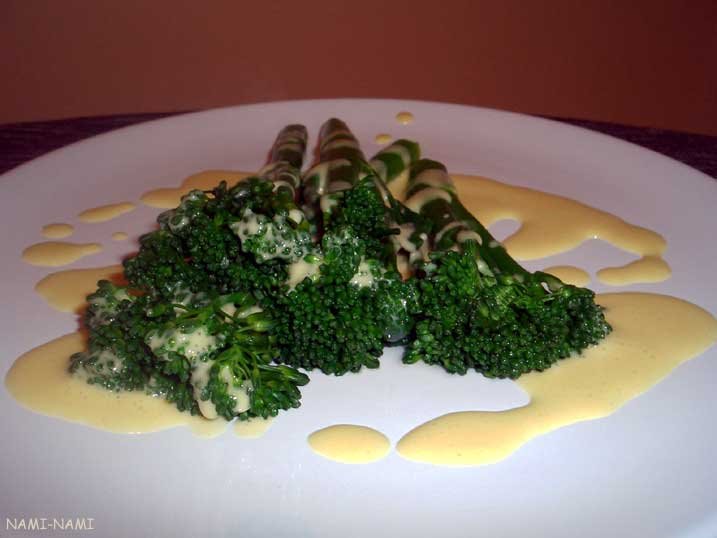
This simple recipe is from Veg: The Greengrocer's Cookbook by Greg Wallace, the British God of Green Things. It was reprinted in the May 2006 issue of Olive, yet another British food magazine, published by BBC. The only change I made to the recipe was omitting the anchovies, as I have none in my kitchen, and being not a fan of the given fish, I didn't rush out to rectify the situation. By all means, feel free to scatter some chopped salty fillets on top.
Sprouting broccoli with hollandaise
(Spargelkapsavõrsed hollandi kastmega)
Serves 4
500 grams of sprouting broccoli, trimmed
salt, water
For the hollandaise sauce:
2 egg yolks
1 Tbsp smooth Dijon mustard
half a juiced lemon
125 grams butter, melted & slightly cooled
salt & black pepper
Bring a large pan of salted water to the boil, add the trimmed broccoli and boil for 4-5 minutes, until broccoli is al dente.
While sprouting broccoli are boiling, make the hollandaise. Whisk the egg yolks, mustard and lemon juice together until combined and doubled in volume. Gradually pour in the melted butter, whisking all the time. Season the sauce with salt and pepper.
Arrange the drained sprouting broccoli on warm plates and pour over the sauce (and anchovies, if you're into that kind of thing:)
And Happy Easter to everyone! I'll be posting about Estonian Easter dessert, pasha, later this week!
Sprouting broccoli with hollandaise
(Spargelkapsavõrsed hollandi kastmega)
Serves 4
500 grams of sprouting broccoli, trimmed
salt, water
For the hollandaise sauce:
2 egg yolks
1 Tbsp smooth Dijon mustard
half a juiced lemon
125 grams butter, melted & slightly cooled
salt & black pepper
Bring a large pan of salted water to the boil, add the trimmed broccoli and boil for 4-5 minutes, until broccoli is al dente.
While sprouting broccoli are boiling, make the hollandaise. Whisk the egg yolks, mustard and lemon juice together until combined and doubled in volume. Gradually pour in the melted butter, whisking all the time. Season the sauce with salt and pepper.
Arrange the drained sprouting broccoli on warm plates and pour over the sauce (and anchovies, if you're into that kind of thing:)
And Happy Easter to everyone! I'll be posting about Estonian Easter dessert, pasha, later this week!

Chicken liver featured pretty often in our kitchen when I was younger. One of my aunties worked in a chicken factory (abattoir?), and was able to smuggle us various cheap chicken bits and pieces during the food-poor and rationed last years of the Soviet era. Some of these chicken parts I hated, some I didn't mind, some I rather liked. Chicken necks will remain my pet hate until I die (my mum used them in soups); chicken wings haven't got enough meat on them, however juicy and flavoursome it is; chicken gizzards and chicken liver - in stews and patés, respectively - I find rather good.
Ever since I saw the recipe and pictures for paté ai fetatini over at Delicious Days few months ago, I've been longing to have some home-made chicken liver pâté again. The opportunity came when I spotted some chicken livers at Edinburgh Farmers' Market. I will try paté ai fetatini recipe soon, but first I had to try my Mum's version..
Chicken liver pâté
(Kanamaksapasteet)
500 grams chicken liver, cleaned
100 grams butter, at room temperature
1 onion, finely chopped
salt
finely crushed black pepper
2-3 Tbsp brandy or cognac
3-4 Tbsp chicken stock
Melt about 25 grams of butter on a frying pan, add the chopped onion and fry gently for 5-10 minutes, until the onion softens a little.
Add the chopped chicken liver and fry on medium heat, turning regularly, for about 5 minutes, until the liver is cooked & no longer pink inside, but is still on the soft side. Let it cool.
If you have an old-fashioned mincer, then mince the fried livers twice (gives a smoother paté). Alternatively, mince the fried livers and onions in a food processor, add soft butter, seasoning and brandy and process until smooth. If the mixture is too dry, then add a bit of chicken stock.
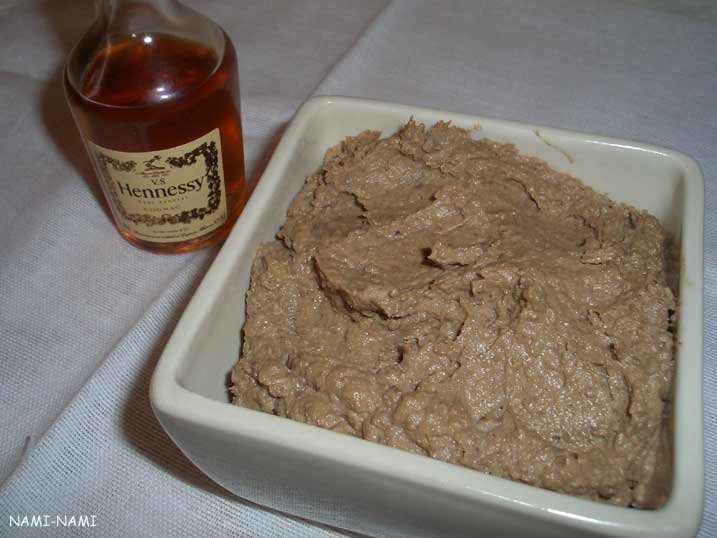 Keeps for a few days in the fridge, covered. To serve, either spread on toast or form into small balls with a warm teaspoon and roll in grated hard cheese - this is a popular way of serving any liver pâté back home.
Now - next time I must ask for some chicken gizzards then..
PS For a slightly fancier take on the chicken liver pâté you can also check out Becks&Posh's recipe for chicken liver crostini, or pictures of it over at Spittoon Extra.