
I know the picture isn't the most appetising (it was taken few weeks ago late at night), and I will change it as soon as I make this dish again. But it's time for another Meatless Monday post and this simple pasta dish has been my to-go-supper ever since I was a postgraduate student in Edinburgh (read: for ages :)) My favourite mushrooms for this are fresh shiitake mushrooms - I love their slightly chewy texture. However, as these are almost impossible to source in Estonia, I've been making this with simple cultivated mushrooms (called šampinjonid in Estonian) instead.
The creamy blue cheese and mushroom sauce is actually pretty versatile. I've served it also with simple fried fish, meatballs as well as steamed vegetables.
Pasta with Blue Cheese and Mushrooms
(Sinihallitusjuustu-seenekaste)
Serves 4
400 g dried pasta
200-250 g fresh mushrooms (about half a litre/2 cups) - f.ex. shiitake, oyster, crimini, white cultivated
1 medium onion
2 Tbsp butter or oil
100-200 ml single cream
100-150 g crumbled blue cheese (Valio Aura, Dolcelatte etc)
freshly ground black pepper
finely chopped fresh parsley
Cook pasta al dente according to the instructions on the packet.
To make the sauce, clean mushrooms and chop into halves or quarters or larger pieces, depending on the size. Peel and finely chop the onion.
Put mushrooms on a heavy pan and fry gently, until the "mushroom juices" evaporate.
Add the butter or oil as well as onion and fry for a few minutes, until the onion begins to soften.
Add the cream and heat until bubbling. Now add the cheese and stir until it's melted. Season to taste, stir in the parsley.
Drain the cooked pasta, and stir in the sauce.
Serve at once.


If you look around Estonian foodblogs, then we all seem to feast on thick and filling Russian-style mushroom soups at the moment - Tuuli has been cooking up mushroom borscht and mushroom rassolnik, Aet has a mushroom solyanka simmering in her saucepan. We had friends over for dinner last night, and as I had got a large bowl of blanched and slightly salted wild mushrooms from K's mum yesterday morning, and made a Russian-style mushroom soup as well, but with addition of fish.
You'll get a best result if using various wild mushrooms. Gypsy mushrooms (Rozites caperatus; kitsemamplid), Russula-mushrooms, Lactarius-mushrooms - all would be perfect, but cultivated mushrooms would work as well (perhaps a mixture of white mushrooms and shiitake mushrooms for some texture?). I had mainly meaty Lactarius scrobiculatus mushrooms (võiseened/kollariisikad)*, with an odd Russula thrown in.
Check your mushroom guide for instructions (some mushrooms - like gypsy mushrooms and many Lactarius-mushrooms can be cooked fresh, some need to be blanched first.
* Note that Wiki considers this an inedible mushroom (well, "Western authors" do). It's much liked over here for its meaty texture and characteristic flavour. It does need to be thoroughly blanched and cooked first, however, and smaller mushrooms are preferred to larger ones.
Mushroom and Salmon Solyanka
Serves four to six

1 large onion, peeled and chopped
about 400 g fresh (wild) mushrooms - pre-blanched, if necessary
2 Tbsp rapeseed or olive oil
3 Tbsp concentrated tomato pureé
1 litre fish stock
4 medium-sized potatoes, peeled and chopped
300 g salmon filet, cut into 1 cm cubes
2 small pickled cucumbers, halved lengthwise and cut into slices
2 Tbsp capers
a small bunch of dill
salt
black pepper
lemon juice, to taste
Heat oil in a saucepan, add onion and mushrooms and sauté for about 5 minutes.
Stir in the tomato paste, cook for a minute or two.
Pour in the fish stock, bring to the boil. Add the potato cubes, then simmer for about 15 minutes, until the potatoes are cooked.
Add fish, capers, cucumber slices and most of the dill. Simmer for another few minutes, then remove the saucepan from the heat.
Season to taste with lemon juice, salt and pepper (solyanka needs a slightly sour note!).
Sprinkle some extra dill on top, garnish with lemon slice or wedge and serve.

Horn of Plenty (also known as black chantarelle or black trompet; Craterellus cornucopioides in Latin) is a chanterelloid, or chanterelle-like, mushroom. It's very dark, almost black, making it a challenging mushroom to forage, as "it is like looking for black holes in the ground". Despite its rather unattractive appearance, it's a delicious and delicate mushroom that retains a good bite even after cooking.
I admit I didn't forage for these particular black trompet mushrooms (on the photo below) myself, but bought some at the Central Market in Tallinn. These shouldn't be too difficult to get hold of in other countries as well - I clearly remember buying some at a French deli in Edinburgh, and there are plenty of recipes using these mushrooms in both British and US food magazines (as compared to some other wild mushrooms I've mentioned over the years).
It's a quick recipe to throw together - but it needs to marinate overnight in the fridge. I loved the mustard flavour and the bite the mushrooms had. Great as a side dish to some meat, or on a slice of toasted light sourdough bread.
Black chantarelles in mustard vinaigrette
(Sinepimarinaadis torbikseened)
Source: Finnish magazine APU
Serves 4

a large punnet (about 400 g/1 litre) of fresh horn of plenty mushrooms
Mustard vinaigrette:
4 Tbsp vegetable or olive oil
3 Tbsp strong sweet mustard
1 Tbsp wine vinegar
3 garlic cloves, finely chopped
0.5 tsp salt or 1 tsp sea salt flakes
0.5 tsp dried tarragon or 0.5 Tbsp fresh tarragon leaves
0.5 tsp fresh thyme leaves
freshly ground black pepper
Wipe the mushrooms clean. Place onto a hot dry frying pan and heat for about 3-5 minutes, until most of the mushroom 'juices' that emerges evaporates. Remove the mushrooms from the pan and let cool.
Combine the vinaigrette ingredients and spoon over the cool horn of plenty mushrooms. Give the mushrooms a good stir, then cover and leave to marinate overnight in the fridge.
Check out other mushroom recipes on Nami-Nami food blog.

I've blogged about serving fried chantarelles on toast two years ago, but as the chantarelle season has began here again and I've been eating fried chantarelle mushrooms several times a week, I decided to blog about them again. The summer lunch of boiled potatoes and fried chantarelles is a classic, a side "salad" of cottage cheese and fried chantarelles is another current favourite, as is this bruschetta-style small toast. Lovely with a glass of chilled white wine or beer on a summer afternoon!
I love pairing chantarelles with dillweed, but thyme or parsley would work as well, as would summer savory.
Chantarelle bruschetti
(Krõbedad saiad praetud kukeseentega)
Serves four
8 slices of white bloomer or Italian style bread
olive oil and butter, for frying
Chantarelle topping:
olive oil and butter, for frying
1 small (red) onion, finely chopped
250 g small chantarelle mushrooms
1 small garlic clove, crushed
fresh dill, finely chopped
salt and pepper
Clean the mushrooms, halve or quarter the larger ones.
Heat some butter and oil on a frying pan. Add the onion and gently sauté for 5-7 minutes, until it starts to soften. Add the mushroomsn and fry for a few minutes, stirring occasionally.
Add the crushed garlic clove, season with salt and pepper. Finally stir in the dill.
Fry the bread slices in oil and butter until golden on both sides. Divide the mushrooms on the bread slices, sprinkle some sea salt flakes on top and serve.
Chantarelle bruschetti
(Krõbedad saiad praetud kukeseentega)
Serves four
8 slices of white bloomer or Italian style bread
olive oil and butter, for frying
Chantarelle topping:
olive oil and butter, for frying
1 small (red) onion, finely chopped
250 g small chantarelle mushrooms
1 small garlic clove, crushed
fresh dill, finely chopped
salt and pepper
Clean the mushrooms, halve or quarter the larger ones.
Heat some butter and oil on a frying pan. Add the onion and gently sauté for 5-7 minutes, until it starts to soften. Add the mushroomsn and fry for a few minutes, stirring occasionally.
Add the crushed garlic clove, season with salt and pepper. Finally stir in the dill.
Fry the bread slices in oil and butter until golden on both sides. Divide the mushrooms on the bread slices, sprinkle some sea salt flakes on top and serve.

Chantarelles fried in butter, boiled new potatoes and fresh green leaves from your garden, dressed with some sour cream. I'll never get tired of that combination!

Another Georgian recipe on Nami-Nami. When I gave couple of Georgian cookery classes back in March, I had chosen 15 carefully selected recipes for the class. Little did I know that this humble and simple mushroom dish would prove to be such a great favourite with the participants. The mushrooms are slowly cooked in cream, alongside with some spices you wouldn't usually associate with mushroom dishes - cloves, bay leaves, cinnamon. Just before serving, some finely chopped fresh herbs are added, which lift the whole dish nicely (a bit like gremolata on osso buco, you know :))
Serve as a side dish or on a buffet spread. For best results, choose large mushrooms or use whole button mushrooms.
Creamy mushrooms with spices and herbs
(Vürtsidega hautatud šampinjonid)
serves 4
500 g mushrooms
1 Tbsp butter
0.5 tsp salt
freshly ground black pepper
200 ml whipping cream/double cream
6 whole black peppercorns
3 cloves
2 bay leaves
small cinnamon stick
large handful of fresh dill, finely chopped
large handful on fresh flat-leaf parsley, finely chopped
First, prepare the mushrooms. If they're very dirty, then rinse them quickly and dry thoroughly. Otherwise just wipe them clean with a wet kitchen paper. Cut mushrooms in halve or into thick slices.
Melt the butter in a saucepan, add the mushrooms. Season generously with salt and pepper, then sauté for a few minutes, until the mushrooms take on some colour.
Meanwhile, place the spices and bay leaves on a piece of muslin or cheesecloth:

Tie them up with a cotton string:

Place the "spice pouch" into the saucepan and push it snugly between the mushrooms. Pour of the cream. Bring to the boil, then reduce the heat and simmer on low heat for about 40-45 minutes, until the cream has reduced considerably.
Remove the "spice pouch", stir in the chopped herbs and serve.


Have you ever seen a recipe for Jerusalem artichoke/Sunchoke/Topinambur-something that begins with "Wash and peel the Jerusalem artichokes". I have. While I obviously understand the washing bit, then I'm a bit unsure about the peeling. See the specimen above? That's just one example of an artichoke I had to deal with earlier today, when preparing lunch for K's mum who came to visit her grand-daughter (who's doing splendidly, by the way:)). Have you ever seen such a knobbly Jerusalem artichoke before? It was beautiful - crisp and fresh, but had I attempted to peel it, there wouldn't have been much left. So I gave it a very good wash and scrub, and simply chopped it. And that's what I'll do from now on - I'll only buy Jerusalem artichokes with thin and beautiful skin, so I can omit that tricky "peel the artichoke" bit...
The inspiration for combining mushrooms and Jerusalem artichokes came from one Estonian monthly, but I've changed the process and proportion so considerably so there's no need to credit anything specific :)
Jerusalem artichoke and mushroom soup
(Maapirni-seenesupp)
Serves 4
250 g Jerusalem artichokes (aka topinambur aka Sunchokes)
250 g mushrooms
1 medium yellow onion
2 Tbsp butter
600 ml water
400 ml whipping/heavy cream (use single/light cream, if you prefer)
salt
freshly ground black pepper
fresh thyme, to garnish

Wash and peel (or not :)) the Jerusalem artichokes. Peel the onions. Clean the mushrooms. Chop all into small chunks.
Heat the butter in a heavy saucepan, add the artichokes, onion and mushrooms and sauté for about 5 minutes. Season with some salt.
Add hot water, bring to the boil. Reduce heat, cover and simmer for 10-15 minutes, until the Jerusalem artichokes are softened.
Transfer into a blender and purée until smooth.
Return to the saucepan, add cream and reheat. Season with salt and pepper (and some dried porcini or chantarelle powder, if you wish), garnish with fresh thyme and serve.
Some shaved Parmesan cheese would also be nice.

Decisions, decisions.
A week or two ago I was staring at a pile of yellow chantarelle mushrooms and a bunch of young orange carrots in my fridge, trying to decide which one should become the centrepiece of our dinner table. Earthy wild mushrooms or succulent sweet carrots? Which one to take, and which one to leave? I couldn't choose (which one would you have chosen?), and combined them both in a quiche instead. The resulting carrot and chantarelle quiche could be my favourite wild mushroom tart of all times.
Here's the recipe. Do try it, if you have a chance.
Carrot and Chantarelle Quiche
(Porgandi-kukeseenepirukas)
Serves 6 to 8

Pastry:
175 g plain/all-purpose flour
0.25 tsp salt
100 g cold butter, cut into cubes
1 egg
Filling:
200 g carrots
300 g fresh chantarelle mushrooms
1 Tbsp butter
about 100 ml /half a cup/ of finely chopped fresh parsley
2 large eggs
200 ml single cream
salt
freshly ground black pepper
Combine flour and salt in a food processor. Add butter and pulse 8-10 times, until mixture is crumbly. Add the egg, pulse again until the mixture begins to come together. Press the mixture into a dough ball, flatten it into a disk. Using your fingers, press the dough to the bottom and sides of a 24 cm pie dish (alternatively, roll out on a lightly floured surface and line the pie form with the pastry.
Place to rest in the fridge for 30 minutes.
Pierce the pastry base with fork, then blind bake in a pre-heated 200 C oven for 10-15 minutes, until the base looks dry.
To make the filling, grate the carrots coarsely. Rinse the mushrooms quickly, if necessary, and drain very thoroughly. If the mushrooms are large, then cut them into smaller pieces.
Heat butter on a saucepan, add mushrooms and carrots. Season with a bit of salt and then sauté on a low heat for 5-7 minutes, until the carrots begin to soften. Remove the pan from the heat. Stir in the parsley.
Whisk eggs with cream, season with a bit of salt and with some black pepper.
Scatter the mushroom and carrot mixture on the pre-baked pastry case, then pour over the egg and cream mixture.
Cook for another 25-30 minutes, until the filling is set and the pie is light golden brown on top.

Here's the recipe. Do try it, if you have a chance.
Carrot and Chantarelle Quiche
(Porgandi-kukeseenepirukas)
Serves 6 to 8
Pastry:
175 g plain/all-purpose flour
0.25 tsp salt
100 g cold butter, cut into cubes
1 egg
Filling:
200 g carrots
300 g fresh chantarelle mushrooms
1 Tbsp butter
about 100 ml /half a cup/ of finely chopped fresh parsley
2 large eggs
200 ml single cream
salt
freshly ground black pepper
Combine flour and salt in a food processor. Add butter and pulse 8-10 times, until mixture is crumbly. Add the egg, pulse again until the mixture begins to come together. Press the mixture into a dough ball, flatten it into a disk. Using your fingers, press the dough to the bottom and sides of a 24 cm pie dish (alternatively, roll out on a lightly floured surface and line the pie form with the pastry.
Place to rest in the fridge for 30 minutes.
Pierce the pastry base with fork, then blind bake in a pre-heated 200 C oven for 10-15 minutes, until the base looks dry.
To make the filling, grate the carrots coarsely. Rinse the mushrooms quickly, if necessary, and drain very thoroughly. If the mushrooms are large, then cut them into smaller pieces.
Heat butter on a saucepan, add mushrooms and carrots. Season with a bit of salt and then sauté on a low heat for 5-7 minutes, until the carrots begin to soften. Remove the pan from the heat. Stir in the parsley.
Whisk eggs with cream, season with a bit of salt and with some black pepper.
Scatter the mushroom and carrot mixture on the pre-baked pastry case, then pour over the egg and cream mixture.
Cook for another 25-30 minutes, until the filling is set and the pie is light golden brown on top.
The good people over at Serious Eats: A Food Blog & Community have declared coming Friday the National Meatloaf Appreciation Day. I take the 'national' here to mean 'US American', but assume that foodblogging is a borderless activity and they accept my humble Estonian submission, too. Here's a meatloaf I made few months ago. I wanted to blog about it in Spring, I did, as it was a really tasty meatloaf. However, I used some spring mushrooms that according to all Estonian, Finnish & Swedish mushroom experts classify as 'delicious eating mushrooms' (and I've got no reason to doubt the expertise of region's mushroom guidebooks), but by Northern American mushroom guides should be avoided at any cost*. I didn't want my Northern American readers to worry about me, so I didn't post about the meatloaf back then :) However, as you can use any other spring, summer or autumn mushrooms here (morels would be especially suitable because of their visual appeal), I figure the recipe is ready for revealing on this blog :)
UPDATE 19.10.2007: Click here to read the roundup over at Serious Eats!
Spring Mushroom Meatloaf
(Hakklihavorm kevadseentega)

250 grams fresh spring mushrooms (morels are perfect)
1 Tbsp olive oil
1 medium onion, minced
2 garlic cloves, minced
4 Tbsp fine breadcrumbs
100 ml single cream
500 grams minced meat (a mixture of pork & beef)
1 egg
2 tsp Herbes de Provence herb mixture
1.5 tsp salt
0.5 tsp black pepper
a bunch of fresh parsley or wild garlic**, chopped
** If you're using wild garlic, then you can reduce the amount of garlic in the recipe
Clean the mushrooms and leave whole, if they're not too large.
Heat the oil on a frying pan, add mushrooms and saute on a low heat for about 5 minutes, until some of the liquid evaporates.
Add the onion and garlic, saute for another 7-10 minutes. Put aside to cool.
Mix cream with breadcrumbs, leave to puff up for 5 minutes. Then add egg, seasoning and minced meat. Mix until combined.
Spoon half of the meat mixture into a greased small loaf tin/terrine form. Top with mushroom & onion mixture, then cover with the rest of the meat mixture.
Bake in the middle of 200 C oven for about 45 minutes, covering the meatloaf with a piece of foil half-way through the baking.
Serve hot with steamed vegetables. Cold meatloaf is excellent when thinly sliced on top of sandwich.
* The mushroom in question is Ptychoverpa bohemica alias wrinkled thimble-cap, known as kurrel in Estonian, poimukellomörsky in Finnish, Vindlad klockmurkla in Swedish, Böhmische Glocken-Morchel/Runzel-Verpel in German, сморчковая шапочка in Russian. You can see a picture here (it's a morel on the left, thimble-cap on the right).
UPDATE 19.10.2007: Click here to read the roundup over at Serious Eats!
Spring Mushroom Meatloaf
(Hakklihavorm kevadseentega)

250 grams fresh spring mushrooms (morels are perfect)
1 Tbsp olive oil
1 medium onion, minced
2 garlic cloves, minced
4 Tbsp fine breadcrumbs
100 ml single cream
500 grams minced meat (a mixture of pork & beef)
1 egg
2 tsp Herbes de Provence herb mixture
1.5 tsp salt
0.5 tsp black pepper
a bunch of fresh parsley or wild garlic**, chopped
** If you're using wild garlic, then you can reduce the amount of garlic in the recipe
Clean the mushrooms and leave whole, if they're not too large.
Heat the oil on a frying pan, add mushrooms and saute on a low heat for about 5 minutes, until some of the liquid evaporates.
Add the onion and garlic, saute for another 7-10 minutes. Put aside to cool.
Mix cream with breadcrumbs, leave to puff up for 5 minutes. Then add egg, seasoning and minced meat. Mix until combined.
Spoon half of the meat mixture into a greased small loaf tin/terrine form. Top with mushroom & onion mixture, then cover with the rest of the meat mixture.
Bake in the middle of 200 C oven for about 45 minutes, covering the meatloaf with a piece of foil half-way through the baking.
Serve hot with steamed vegetables. Cold meatloaf is excellent when thinly sliced on top of sandwich.
* The mushroom in question is Ptychoverpa bohemica alias wrinkled thimble-cap, known as kurrel in Estonian, poimukellomörsky in Finnish, Vindlad klockmurkla in Swedish, Böhmische Glocken-Morchel/Runzel-Verpel in German, сморчковая шапочка in Russian. You can see a picture here (it's a morel on the left, thimble-cap on the right).
We went to one last mushroom forageing trip on Saturday, and got a large basket of mushrooms. Sadly, the season is now over - night frosts are here, and frost-bitten wild mushrooms aren't as nice. From the season's last saffron milkcaps, chantarelles and various porcini mushrooms I made these small rye bread canapés for a dinner with friends on Sunday night.
Delicious!!
Rye bread canapés with wild mushroom 'Caviar' and soft-boiled quail eggs
(Metsaseenesuupisted)

finely chopped wild mushrooms (preferably picked by yourself, then cleaned and sautéed with a little butter)
a small minced onion
some lemon juice
fresh dill
salt and pepper.
quails' eggs
Fry the rye bread slices in butter on both sides, cool a little.
Cover with mushroom 'caviar' and top with a soft-boiled (1 minute) quail egg.
Delicious!!
Rye bread canapés with wild mushroom 'Caviar' and soft-boiled quail eggs
(Metsaseenesuupisted)

finely chopped wild mushrooms (preferably picked by yourself, then cleaned and sautéed with a little butter)
a small minced onion
some lemon juice
fresh dill
salt and pepper.
quails' eggs
Fry the rye bread slices in butter on both sides, cool a little.
Cover with mushroom 'caviar' and top with a soft-boiled (1 minute) quail egg.

Ten days ago we spent few hours in the forest forageing for mushrooms again. It had been raining on the previous days, yet the temperatures were nice and warm (17-18 C), so we knew there'd be lots of mushrooms. And we weren't disappointed. It was a two-stop forageing trip. After about 30 minutes in Our Secret Mushroom Forest Number One, I had barely covered the bottom of my new mushroom basket:

A mixture of Russula mushrooms on the left, one lone, but very pretty yellow Lactarius scrobiculatus amidst them, and a small pile of Saffron Milkcaps and False Saffron Milkcaps on the right.
Obviously it was time to move on. We quickly headed to Our Secret Mushroom Forest Number Two, where we played hide and seek with each other and the wild mushrooms for another 3 hours, to emerge with this beautiful bounty:

The basket contains a lot of saffron milkcaps and false saffron milkcaps, which are hidden under layers and layers of brown rufous milkcaps and white-and-pink Russula mushrooms, and a handful of gypsy mushrooms. We could have picked a lot more (there were A LOT of edible wild mushrooms), but it was starting to get darker, and the basket was already getting too heavy to carry, so we decided to head home.
Back home I had to sort through twice the amount of mushrooms on the photo - mine and K's - and do all the preparatory work for pickling, salting, freezing and so on. The saffron milkcaps and false saffron milkcaps, however, were simply fried in butter and used for this simple and delicious dish that is a perfect showcase for these beautifully orange-coloured fragrant mushrooms. I had 1.65 kg of cleaned saffron milkcaps/porgandriisikad and false saffron milkcaps/kuuseriisikad (both considered equally excellent eating mushrooms here in Estonia), so I had plenty for this vegetarian gratin, and also put some away in air-tight glass jars in the fridge, so I could make this dish again soon..
Wild Mushroom & Potato Gratin
(Kuuseriisika-kartulivorm)
Serves 6

1 kg boiled potatoes, thinly sliced
500-600 grams cleaned saffron milkcaps*
2-3 Tbsp butter
1 leek, thinly sliced
150 grated cheese
300 ml single cream
salt
black pepper
fresh herbs, finely chopped
Clean the mushrooms, cutting them into smaller pieces. Heat a heavy-bottomed frying pan on a low heat, add mushrooms and heat for a few minutes, until 'juices' evaporate. Then add butter, and fry, until mushrooms are glistening.
Butter a large oven dish, layer half of the potatoes at the bottom. Cover with fried mushrooms, then top with the rest of the potatoes. Season with salt and pepper, then sprinkle with grated cheese and finally pour the cream over.
Bake at 200 C for about 20 minutes, until the dish is hot and lovely golden brown on top.
Garnish with chopped hers and serve with some salad leaves.

* You can use other wild or cultivated mushrooms here, though they won't look and taste as delicious :)
For more mushroom ideas, check out these recipes.

Some of you may have noticed the above 'teaser photo' on my blog few days ago. Well, these tiny chantarelle mushrooms are not picked by myself. We tried, believe me. After spotting chantarelle mushrooms from Southern Estonia at Tallinn Central Market on St John's eve, we headed straight to the forest. Yet all we got was a lone porcini and a kilogram of wild strawberries (I'm not complaining, don't get me wrong:) We tried again last weekend, yet had to settle for some russula mushrooms, some wild blueberries and forest raspberries and then overcome our sadness by playing with small chicks. We did pick enough lime blossoms to comfort us through the winter, and spotted our first native orchid species, so it was quite a productive weekend after all.
Estonia is a funny place in that sense. It's small and compact (45 000 sq km), yet has such variations in climate. And mushroom seasons.. Southerners have been forageing for yellow chantarelles for weeks now, northerners like K. and I must settle for shopping at the market as for now.. We'll try again in a week or two..
Should the chantarelle season be there whereever you are, I share some of my favourite ways with those tantalising yellow mushrooms.

My very favourite way with yellow chantarelles is to fry them in some oil or butter, sprinkle with herbs and season with a pinch of salt. These are perfect for topping a slice of buttered home-baked rye bread (above), or as an accompaniment to boiled small new potatoes (you can always add some cream to fried mushrooms and let it reduce a little). Any leftovers (before sprinkling with herbs, that is) can be stored in the freezer for up to three months.

Here's another way of serving chantarelles: chantarelle-stuffed kohlrabis with a creamy blue cheese sauce. I had come across lovely kohlrabis at the market, and came up with a kohlrabi-chantarelle starter when cooking a dinner for our Norwegian guests just over a week ago (the same dinner where I served the apricot tartlets with pistachio paste, remember?) I scooped the kohlrabis and chopped the flesh, which I then simply sauteed in some oil together with chantarelles (yep, simply mushrooms and chopped kohlrabi; I didn't add any onion or garlic to the dish, although you're welcome to do that). I seasoned the mushroom mixture with salt, pepper and some chopped green onions, stuffed the pre-baked kohlrabi halves with the mixture and baked them in a 200C oven for 20 minutes. These were placed on a bed (puddle:) of creamy blue cheese sauce. I'd happily make this starter again, although I'd probably peel the kohlrabis first, as the 'skin' was too tough to be eaten.
Other chantarelle ideas @ Nami-nami:
Chantarelle Cappuccino (February 2007)
Chantarelle Sauce & Chantarelle Quiche (August 2005)
BLAST FROM THE PAST
Two years ago I wrote about a bar of Cioccolato con Peperoncino I had bought in Naples and shared a recipe for Clotilde's Chocolate & Chilli Muffins with a kick.

All my regular readers know by now that I love mushrooms, especially wild ones. And although you can easily buy various fresh wild mushrooms at the market or preserved wild mushrooms in supermarkets, I prefer forageing for my own wild mushrooms - see here and here, for example. There's something immensely gratifying and refreshing about those long and quiet walks in the forests, and the excitement about what and where and how much we'll find is fun.
 In late April and early May, I came across few ladies selling morels at the Tallinn Central Market. There's nothing special about these mushrooms as such (they were on the menu in pretty much every restaurant in London back in April), although they tend to be somewhat unknown among urban fungiphiles here in Estonia. K and his mom, for example, know loads of autumnal wild mushrooms, but had never come across morels yet. They hadn't even looked for any. When in Paluküla in early May, I asked my grandma and uncle and other villagers about morel mushrooms, and they knew nothing. Yet, my recently acquired new mushroom forager's bible, 400 Eesti seent (400 Estonian mushrooms) had a picture of black morels (Morchella conica) on the cover and claimed that these spring mushrooms should be pretty common in northern Estonia.
I was convinced that if I just looked hard enough, I'd find some.
And so I did. In mid-May, K's mum - as I said, hitherto unfamiliar with morels - asked around in her village about some unfamiliar spring mushrooms, and soon enough one of the neighbours told her that there are funny-looking mushrooms growing on the grassy open field just outside their farm. She picked up the mushrooms (on the bottom left, see photo above) and brought them to us for identification. With the help of the trusty mushroom bible we easily identified them as Morcella esculenta, examples of one of the yellow morels (pallohuhtasieni in Finnish, rundtoppmurkla in Swedish, сморчок настоящий alias smortšok nastojaššii in Russian). A fortnight later we were in Paluküla area again, and K. and I headed out to the field where the mushrooms were found earlier. Nothing.. We wondered around for about half an hour, carefully staring at the open fields, trying to spot a precious morel, but without luck. On the way back to the house we decided to have one last look at a yellow-green open field surrounded by tall birch trees. And voilà - suddenly I spotted a huge yellow morel (bottom right, photo above). And another, and another and another. Four in total. Then my mushroom luck was over, but K. found four more mushrooms (- you see, there is justice and gender equality in the world, after all:) Quite surprisingly, we returned from our first ever morel forageing trip with eight succulent yellow morels (top left, photo above). We must have got a good nose for mushrooms, the pair of us :)
The mushrooms? Well, if you've got something so delicious, you don't want to over-handle them. We cleaned and sliced them, fried in butter with some salt and pepper and a dash of cream, and ate them with some fried garlic scapes and salad leaves (top right, photo above). Mmmmmm.
I've got a feeling that it'll be a good year for wild mushrooms...
PS You can read more about identifying morel mushrooms over at MushroomExpert.com. Only pick mushrooms that you are certain about!!!
 Andrew of SpittoonExtra is hosting this month's edition of Waiter there is something in my ..., and the theme is bread. In ideal circumstances, I would have wanted to make a proper Estonian leavened rye bread. However, as I only just returned from London on the wee hours of Monday morning, and was busy celebrating my birthday yesterday, I didn't have time to start the rye bread. Yet as I was still keen to make something local, I decided to adapt an old recipe for a simple local loaf bread, karask.
Karask is a type of bread in Estonia and Finland that doesn't use yeast nor require leavening; instead, baking powder or baking soda is used to raise the bread (so it is a bit like the Irish soda bread then). Usually karask is made with barley flour (mine uses plain wheat flour), and a popular local version uses curd cheese to flavour and moisten the bread (I've also got recipes using leftover potato mash to give bulk to the bread). I made mine with mushrooms - one of my favourite ingredients, as most of my loyal readers would know by now (just see here), and added a generous handful of fresh herbs..
The texture of the bread is quite heavy, so if you're into light and fluffy breads, then this karask is not for you. However, it will be perfect for those of you who like mushrooms (and there are many fungiphiles or mushroom lovers out there, believe me!) It's at its best when served warm, straight out of the oven, sliced thickly and buttered with a slightly salted butter. Yet it is also delicious cold on the following day, and would make a lovely picnic dish, as it cuts into neat cubes or slices when cold.
Enjoy!
Seenekarask or Estonian quick mushroom bread
Serves 6

250 fresh mushrooms (I used a mixture of brown and white champignon mushrooms), quartered
1 large onion (ca 100 grams), finely chopped
1 Tbsp oil
150 grams plain flour
60 grams porridge oats
1 tsp baking powder
a pinch of salt
200 ml milk
100 grams butter, melted
5 grams flat-leaf parsley, finely chopped
30 grams cheese, grated
Heat the oil in a heavy frying pan, add mushrooms and onions and fry on a moderate heat for about 5 minutes, until mushrooms have browned a little and onions have began to soften. Remove from the heat and cool.
In a large mixing bowl, mix the flour, oats, baking powder, salt and herbs. Stir in the milk and melted butter.
Pour into a buttered (and/or lined) loat tin and sprinkle grated cheese on top.
 Bake at 200 C for 35-40 minutes, until the loaf is cooked (due to high mushroom content, the loaf remains moist).
Slice and serve.
As I said, the loaf is at its best when still warm, but remains delicious and flavoursome until the next day.
Here are links to my previous Waiter there is something in my ... entries:
March 2007 (EASTER BASKET, hosted by Johanna): a selection of various Easter delights.
February 2007 (PIE, hosted by Jeanne): a great Russian puff pastry and fish pie, Salmon Kulebyaka.
January 2007 (STEW, hosted by Andrew): my version (in collaboration with Anthony Bourdain:) of the French classic Boeuf Bourguignon.
UPDATE 26.4.2007: Read Andrew's round-up of sweet and savoury bread recipes
You're all familiar with rice, and many of you have used pearl barley, cous cous, bulghur wheat and quinoa in your kitchen. But what about buckwheat? Buckwheat flour makes an appearance in Japanese soba noodles, in French galettes de sarrasin, and in Russian blini pancakes. Yet I suspect that buckwheat groats are less common even amongst well-informed food bloggers. Yes, there is Clotilde with her recipe for Buckwheat Salad with Honey Spice Cake, and Gerda with a recipe for exotic Buckwheat Curry. But other than that, Elise's fabulous recipe search across foodblogs only yields recipes using buckwheat flour.
Yet buckwheat groats definitely deserve a place at your kitchen table, at least occasionally. They're unusual and different, hence interesting. Buckwheat is naturally gluten-free, the groats have a lovely nutty flavour and tender texture - and they're good to your vascular system. What's not to like!? Buckwheat porridge is widely known here in Estonia - either as a dish on its own, or as a side dish instead of potatoes or rice. To make things easier, you can even buy pre-cooked buckwheat flakes these days, which make a lovely breakfast porridge.
Here, however, is a main dish I came up with last week. I wasn't sure what to call it in the beginning. It's not a stew, as although it's moist, there's no liquid to hold the components together and warrant the name. It's not a buckwheat 'risotto', as there's no element of creaminess. So I decided to go with a 'warm salad'. I served it with thin, long slices of crunchy carrot, but some spicy salad leaves would make a good accompaniment, too.
A warm buckwheat and mushroom salad
(Soe tatra-seenesalat)
Serves 4

1 Tbsp canola oil
200 ml buckwheat groats
2 carrots, coarsely grated
1 onion, finely chopped
0.5 tsp salt
0.5 tsp black pepper
500 ml water
a generous handful of fresh parsley, chopped
1 Tbsp canola oil
300 grams of mushrooms (a mixture of champignons, oyster mushrooms, chantarelles etc), coarsely chopped
Heat the oil in a heavy-bottomed saucepan and add the buckwheat. Stir for a minute, until the groats are glistening with oil. Add the onion and carrots, reduce heat and fry gently for a few minutes, until onion has softened a little. Do not burn!
Season with salt and pepper, add the boiling water. Cover and let simmer for about 15 minutes, until the groats are al dente or tender, if you prefer.
Meanwhile, fry the chopped mushrooms in oil, until they're wilted and slightly browned.
Add the fried mushrooms to the buckwheat porridge, stir gently to combine. Sprinkle generously with parsley and serve.
Earlier @ Nami-nami:
Buckwheat and mushroom oven pie (September 2005)
WHB:
This is also my entry to the Weekend Herb Blogging, this time hosted by Anh from Food Lover's Journey.

Yet buckwheat groats definitely deserve a place at your kitchen table, at least occasionally. They're unusual and different, hence interesting. Buckwheat is naturally gluten-free, the groats have a lovely nutty flavour and tender texture - and they're good to your vascular system. What's not to like!? Buckwheat porridge is widely known here in Estonia - either as a dish on its own, or as a side dish instead of potatoes or rice. To make things easier, you can even buy pre-cooked buckwheat flakes these days, which make a lovely breakfast porridge.
Here, however, is a main dish I came up with last week. I wasn't sure what to call it in the beginning. It's not a stew, as although it's moist, there's no liquid to hold the components together and warrant the name. It's not a buckwheat 'risotto', as there's no element of creaminess. So I decided to go with a 'warm salad'. I served it with thin, long slices of crunchy carrot, but some spicy salad leaves would make a good accompaniment, too.
A warm buckwheat and mushroom salad
(Soe tatra-seenesalat)
Serves 4

1 Tbsp canola oil
200 ml buckwheat groats
2 carrots, coarsely grated
1 onion, finely chopped
0.5 tsp salt
0.5 tsp black pepper
500 ml water
a generous handful of fresh parsley, chopped
1 Tbsp canola oil
300 grams of mushrooms (a mixture of champignons, oyster mushrooms, chantarelles etc), coarsely chopped
Heat the oil in a heavy-bottomed saucepan and add the buckwheat. Stir for a minute, until the groats are glistening with oil. Add the onion and carrots, reduce heat and fry gently for a few minutes, until onion has softened a little. Do not burn!
Season with salt and pepper, add the boiling water. Cover and let simmer for about 15 minutes, until the groats are al dente or tender, if you prefer.
Meanwhile, fry the chopped mushrooms in oil, until they're wilted and slightly browned.
Add the fried mushrooms to the buckwheat porridge, stir gently to combine. Sprinkle generously with parsley and serve.
Earlier @ Nami-nami:
Buckwheat and mushroom oven pie (September 2005)
WHB:
This is also my entry to the Weekend Herb Blogging, this time hosted by Anh from Food Lover's Journey.
Here’s how to get hold of that very special bottle of wine that you see at your friends’ place.
A fortnight ago K. and I were invited to have dinner with some good old friends of his, Peter & Kristel. We had a lovely meal, drank some good wine (and pomegranate juice) and watched holiday pictures from South Africa, where the couple had spent the New Year’s Eve. It was my first visit to their place, so I was shown around the house (lots of lovely art, a captivating fish tank). Before we continued with biltong and fig compote, we stood for a while next to the couple’s wine collection.
It was then that K. spotted a precious bottle of Burgundy: Clos de la Roche, Patriarche Père et Fils (Beaune, 1992). K. adores Burgundy, so he came up with a cunning idea.
So it happened that last Sunday, Peter & Kristel turned up at our doorstep with that very bottle of Bourgogne, as K. had managed to convince them that it’s indeed a good idea to drink this wine together. As a good bottle of Burgundy needs a good Burgundy dish, then I made my Boeuf Bourguignon again. We invited another couple, Paavo & Kristina and their little daughter Gretel over, too (yep, the ones who almost ate all my apple cake few months ago:), who contributed a starter. And not just a starter, but a stunning wild chantarelle cappuccino.
Cooking the chantarelles with herbs and cream:

The soup is ready – it does look like a real thing, doesn’t it? We used our new (well, we bought them in November) iittala Origo bowls and Arabia plates:

The incredibly smooth chantarelle cappuccino was garnished with thyme and served with stuffed baked portabello mushrooms - being made on the photo below. As you can see, then little Gretel (aged 5) is a good hand in the kitchen, although only half of the blue cheese ended up on the mushrooms, as Gretel ate the rest of it. Note that we all need some moral support in the kitchen – hence the wine glass on the worktop (for the mother) and the teddy bear (for Gretel):

For the main course, I made Anthony Bourdain’s boeuf bourgoingnon again.
And for the dessert, we had my matcha loaf (third time in less than ten days), this time made by K. and supplemented with some finely chopped almonds. K. also candied some fresh kumquats and piped some Madagascar vanilla flavoured whipped cream on top:

And as for the wine? Well, it was definitely good enough excuse for a lovely night in with old (for K.) and new (for me) friends. It was full of character for sure, even if the other bottle, Bourgogne A. Rodet (Antonin Rodet, 1998) was more to my liking..
A fortnight ago K. and I were invited to have dinner with some good old friends of his, Peter & Kristel. We had a lovely meal, drank some good wine (and pomegranate juice) and watched holiday pictures from South Africa, where the couple had spent the New Year’s Eve. It was my first visit to their place, so I was shown around the house (lots of lovely art, a captivating fish tank). Before we continued with biltong and fig compote, we stood for a while next to the couple’s wine collection.
It was then that K. spotted a precious bottle of Burgundy: Clos de la Roche, Patriarche Père et Fils (Beaune, 1992). K. adores Burgundy, so he came up with a cunning idea.
So it happened that last Sunday, Peter & Kristel turned up at our doorstep with that very bottle of Bourgogne, as K. had managed to convince them that it’s indeed a good idea to drink this wine together. As a good bottle of Burgundy needs a good Burgundy dish, then I made my Boeuf Bourguignon again. We invited another couple, Paavo & Kristina and their little daughter Gretel over, too (yep, the ones who almost ate all my apple cake few months ago:), who contributed a starter. And not just a starter, but a stunning wild chantarelle cappuccino.
Cooking the chantarelles with herbs and cream:

The soup is ready – it does look like a real thing, doesn’t it? We used our new (well, we bought them in November) iittala Origo bowls and Arabia plates:

The incredibly smooth chantarelle cappuccino was garnished with thyme and served with stuffed baked portabello mushrooms - being made on the photo below. As you can see, then little Gretel (aged 5) is a good hand in the kitchen, although only half of the blue cheese ended up on the mushrooms, as Gretel ate the rest of it. Note that we all need some moral support in the kitchen – hence the wine glass on the worktop (for the mother) and the teddy bear (for Gretel):

For the main course, I made Anthony Bourdain’s boeuf bourgoingnon again.
And for the dessert, we had my matcha loaf (third time in less than ten days), this time made by K. and supplemented with some finely chopped almonds. K. also candied some fresh kumquats and piped some Madagascar vanilla flavoured whipped cream on top:

And as for the wine? Well, it was definitely good enough excuse for a lovely night in with old (for K.) and new (for me) friends. It was full of character for sure, even if the other bottle, Bourgogne A. Rodet (Antonin Rodet, 1998) was more to my liking..
There's a young man in Argentina who knows the perfect pronounciation for two Estonian words. One of them is 'sünnipäevakringel' and the other is 'seenepirukad'. The first is a large sweet yeast kringel served for birthdays, and the other means 'mushroom pies/pierogi'. He really liked both of them, so he made a special effort and learned these two words, enabling him to ask for them. That's quite an accomplishment, as it's not the easiest language to master, apparently..
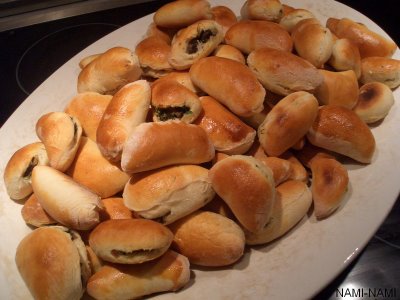
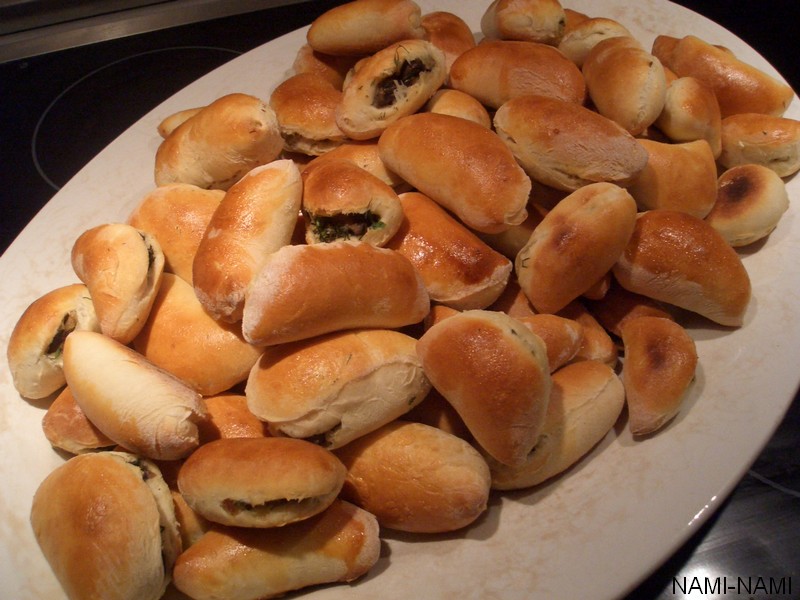
This Argentine guy said that these remind him of empanadas. I don't know about that - these are as Estonian to me as you can get. You can make one large pie (in which case you call it 'seenepirukas', of course:) or medium-sized ones. I like to make them small (as you could figure from the title of this post), so you could finish them in two-three bites. That's a lot of extra work, as small dough circles are more fiddly to fill and pinch (and as you can see from the picture, I could still improve my pinch-the-edges-technique, even after all these years). The soft yeast dough encases a flavoursome and salty mushroom filling, which I simply adore..
The picture below is taken in early November (I mentioned making these during my apple cake season) . I've made them a few times since. Most recently I served them at a party last Thursday, when I used half of the dough for small Turkish lamb and pomegranate 'pizzas' - I'll write about these scrumptious things soon..
And yes, you need to knead this dough. I know that every self-respecting food blogger has recently been at least trying to make the new wonderbread that you don't have to knead. I haven't and as I find kneading dough rather relaxing, I doubt if I will..
Seenepirukad or wild mushroom pies, Estonian style
(Seenepirukad pärmitainast)
Adapted from Eesti rahvatoite by Silvia Kalvik (1981)
Dough:
500 ml lukewarm milk
25 grams fresh yeast
a generous pinch of sugar
1 tsp salt
2 to 3 Tbsp butter, softened
1.2 to 1.5 litres plain flour
Filling:
300-400 ml chopped mushrooms (if using salted mushrooms, then soak first)
1 Tbsp butter
1 small onion, minced
sour cream
salt
dill, either fresh or dried
First make the dough. Crumble the fresh yeast into a large warm bowl, add the sugar and let it stand for 5 minutes, stirring through, until the yeast 'melts'. Add milk, salt, most of the flour and stir until combined. Knead in the soft butter, adding more flour, if necessary. Knead for 5-10 minutes, depending on your patience. You should end up with a soft dough that doesn't stick too much onto your hands. Cover the bowl with a cling film and leave to double in size in a warm draught-free place. That should take about an hour. (If you're not ready to bake after an hour, then knock the dough back when it has rised and leave to rise again for a bit more).
For the filling, chop the mushrooms finely and fry in melted butter together with the chopped onions for about 5 minutes. Cool, add some sour cream to combine (a Tbsp or two is enough, you don't want the filling to be too wet). Season with salt - the amount depends on whether you're using fresh or salted mushrooms - and lots of dill.
When ready to bake, then take about a third of the dough at a time, and roll it out on a floured tabletop until about 3 mm thick. Cut out small circles (I use a 5 cm glass), put about a teaspoonful of filling in the middle*, and pinch the edges firmly together, so you have half-moon shaped pies.
Put onto a baking sheet, brush with egg and bake at 200C for 15 minutes, until the pies are lovely golden brown. Transfer to a metal rack to cool. If you prefer your pierogi really soft, then cover with a clean towel to keep the moisture in the pies.
* If you have some mushroom filling left over, then add some extra sour cream and use as a salad on crostini or vol-au-vents or on rye bread.
This Argentine guy said that these remind him of empanadas. I don't know about that - these are as Estonian to me as you can get. You can make one large pie (in which case you call it 'seenepirukas', of course:) or medium-sized ones. I like to make them small (as you could figure from the title of this post), so you could finish them in two-three bites. That's a lot of extra work, as small dough circles are more fiddly to fill and pinch (and as you can see from the picture, I could still improve my pinch-the-edges-technique, even after all these years). The soft yeast dough encases a flavoursome and salty mushroom filling, which I simply adore..
The picture below is taken in early November (I mentioned making these during my apple cake season) . I've made them a few times since. Most recently I served them at a party last Thursday, when I used half of the dough for small Turkish lamb and pomegranate 'pizzas' - I'll write about these scrumptious things soon..
And yes, you need to knead this dough. I know that every self-respecting food blogger has recently been at least trying to make the new wonderbread that you don't have to knead. I haven't and as I find kneading dough rather relaxing, I doubt if I will..
Seenepirukad or wild mushroom pies, Estonian style
(Seenepirukad pärmitainast)
Adapted from Eesti rahvatoite by Silvia Kalvik (1981)
Dough:
500 ml lukewarm milk
25 grams fresh yeast
a generous pinch of sugar
1 tsp salt
2 to 3 Tbsp butter, softened
1.2 to 1.5 litres plain flour
Filling:
300-400 ml chopped mushrooms (if using salted mushrooms, then soak first)
1 Tbsp butter
1 small onion, minced
sour cream
salt
dill, either fresh or dried
First make the dough. Crumble the fresh yeast into a large warm bowl, add the sugar and let it stand for 5 minutes, stirring through, until the yeast 'melts'. Add milk, salt, most of the flour and stir until combined. Knead in the soft butter, adding more flour, if necessary. Knead for 5-10 minutes, depending on your patience. You should end up with a soft dough that doesn't stick too much onto your hands. Cover the bowl with a cling film and leave to double in size in a warm draught-free place. That should take about an hour. (If you're not ready to bake after an hour, then knock the dough back when it has rised and leave to rise again for a bit more).
For the filling, chop the mushrooms finely and fry in melted butter together with the chopped onions for about 5 minutes. Cool, add some sour cream to combine (a Tbsp or two is enough, you don't want the filling to be too wet). Season with salt - the amount depends on whether you're using fresh or salted mushrooms - and lots of dill.
When ready to bake, then take about a third of the dough at a time, and roll it out on a floured tabletop until about 3 mm thick. Cut out small circles (I use a 5 cm glass), put about a teaspoonful of filling in the middle*, and pinch the edges firmly together, so you have half-moon shaped pies.
Put onto a baking sheet, brush with egg and bake at 200C for 15 minutes, until the pies are lovely golden brown. Transfer to a metal rack to cool. If you prefer your pierogi really soft, then cover with a clean towel to keep the moisture in the pies.
* If you have some mushroom filling left over, then add some extra sour cream and use as a salad on crostini or vol-au-vents or on rye bread.
I enjoyed hunting for mushrooms so much in September, that I spent another three hours in a forest last Sunday looking for the last of season's wild mushrooms. We didn't get into the forest until 1pm, and for a moment I thought our trip will be fruitless (mushroomless?), as it was incredibly difficult to tell a mushroom amongst all those yellow and brown and pumpkin-coloured fallen leaves that thickly covered the ground. However, after some visual adjustment and careful and systematic observation, I began to see the mushrooms again (I lost the skill again after some 2,5 hours, but being a lazy urbanite, I eventually simply got tired and wanted to get back home. Or at least to my savoury muffins that were at the back of our car). Back in my new kitchen later that night, I brushed all the mushrooms clean, sorted them into categories (straight onto the frying pan / soak-cook-fry / soak-cook-pickle / soak-cook-brine). This is what K. and I had found:
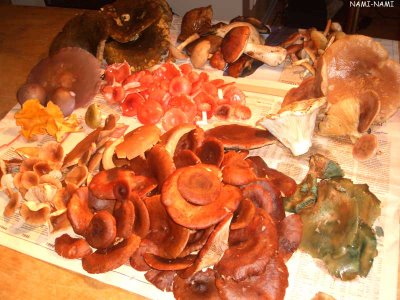
Starting from the top left corner, clockwise (sorry for the slight redness of the colours): ugly milkcaps/Lactarius turpis/tõmmuriisikad (photo) ; various ceps/porcini/puravikud; Lactarius scrobiculatus/võiseened; the slightly greenish ones are saffron milk-caps/Lactarius deliciosus/kuuseriisikad - very delicious mushrooms that can be thrown straight onto your frying pan (photo); rufous milkcaps/Lactarius rufus/männiriisikad that must be blanched once or twice to rid them of their bitterness; wonderful (though rather unexpected this time of the year) chantarelles/Cantharellus cibarius/kukeseened; as well as three handsome Pied Bleu or Wood Blewits/Lepista nuda/lilla ebaheinik that I preserved in brine. And finally some light pink russulas/pilvikud (in the middle, next to that lonesome green russula on the left) that must be cooked in water before they can be fried or sauteed.
The yellow chantarelles and saffron milkcaps were each fried in butter and then used as a topping for simple bruschetti.
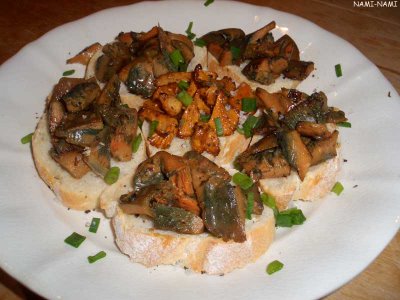
The russula mushrooms were blanched twice and were used for mushroom sauce late last night (fry with some onions, top with cream, serve with mashed potatoes). The ugly milkcaps and Lactarius scrobiculatus mushrooms were first boiled twice, and then preserved in salty brine (after soaking, these can be used for sauces, quiche filling, salads), rufuous milkcaps were pickled in marinade (can be eaten as a snack or used for salads).
Again, I'm rather pleased with my bounty, and am looking forward to using all those mushrooms during the coming autumn and winter.
Oh, and did I mention the cranberries? I've got enough for at least 10 cakes now:)
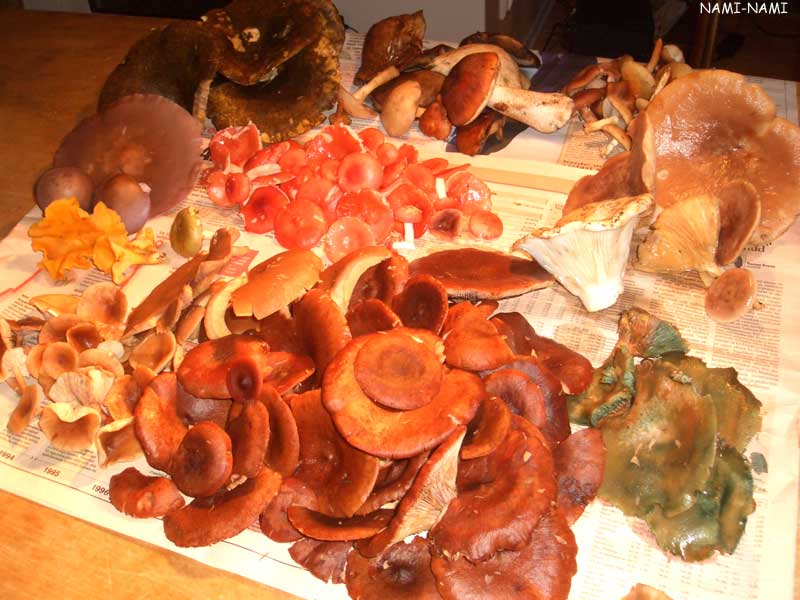
Starting from the top left corner, clockwise (sorry for the slight redness of the colours): ugly milkcaps/Lactarius turpis/tõmmuriisikad (photo) ; various ceps/porcini/puravikud; Lactarius scrobiculatus/võiseened; the slightly greenish ones are saffron milk-caps/Lactarius deliciosus/kuuseriisikad - very delicious mushrooms that can be thrown straight onto your frying pan (photo); rufous milkcaps/Lactarius rufus/männiriisikad that must be blanched once or twice to rid them of their bitterness; wonderful (though rather unexpected this time of the year) chantarelles/Cantharellus cibarius/kukeseened; as well as three handsome Pied Bleu or Wood Blewits/Lepista nuda/lilla ebaheinik that I preserved in brine. And finally some light pink russulas/pilvikud (in the middle, next to that lonesome green russula on the left) that must be cooked in water before they can be fried or sauteed.
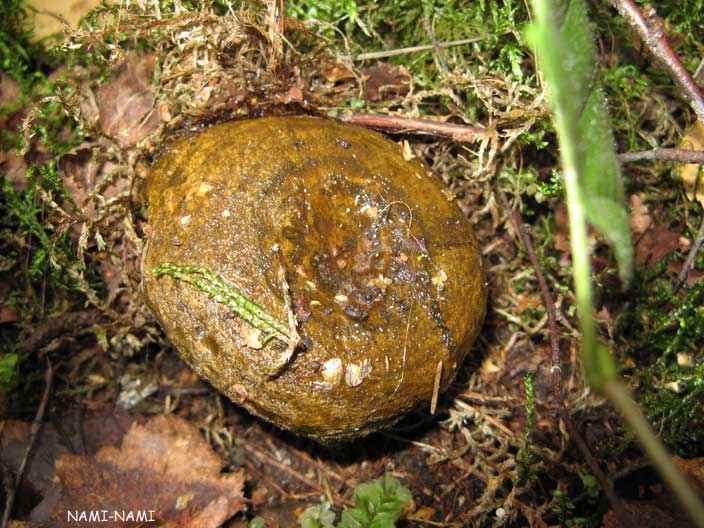
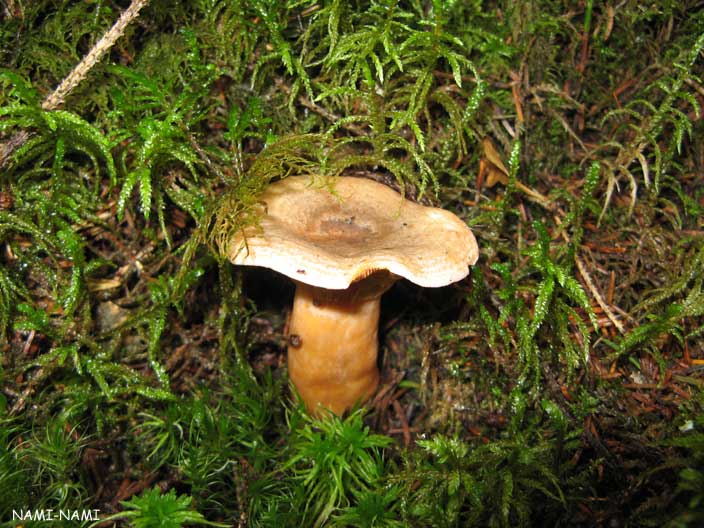
The yellow chantarelles and saffron milkcaps were each fried in butter and then used as a topping for simple bruschetti.

The russula mushrooms were blanched twice and were used for mushroom sauce late last night (fry with some onions, top with cream, serve with mashed potatoes). The ugly milkcaps and Lactarius scrobiculatus mushrooms were first boiled twice, and then preserved in salty brine (after soaking, these can be used for sauces, quiche filling, salads), rufuous milkcaps were pickled in marinade (can be eaten as a snack or used for salads).
Again, I'm rather pleased with my bounty, and am looking forward to using all those mushrooms during the coming autumn and winter.
Oh, and did I mention the cranberries? I've got enough for at least 10 cakes now:)
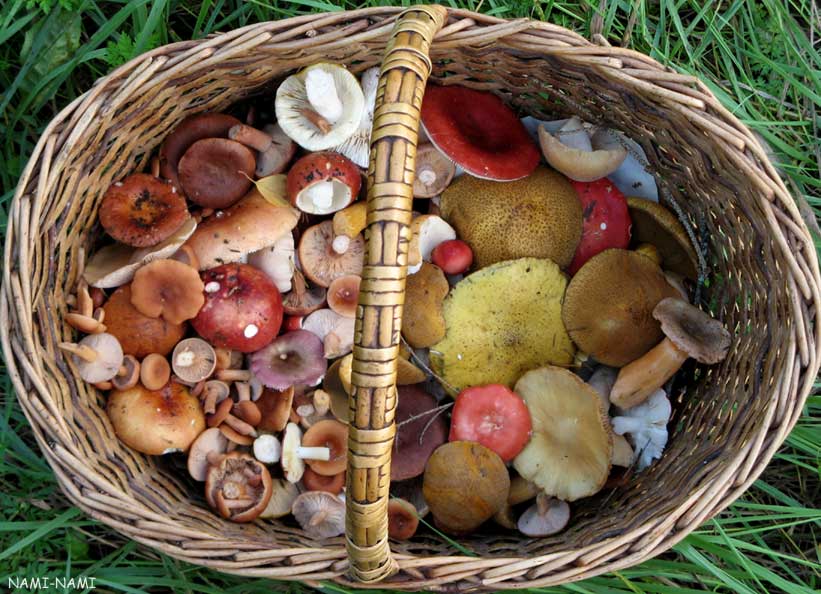
Click on the photo to enlarge.
Estonia seems to trigger the hunter-gatherer in me. In July I took pleasure in looking for wild strawberries and cloudberries. This time around I was fighting prickly fallen branches and annoying deer-flies, while trying to tell an edible mushroom from a non-edible or even poisonous one. This was harder than I thought. Although forageing for wild mushrooms was something I did often as a child, I've led a rather urban life for the last decade or so. So no wonder I greedily managed to gather a whole lot of non-edible brown roll-rim mushrooms (Paxillus involutus) in my basket, before I was told to discard them then and there. Ouch. Embarrassing. But then these fungi were probably too plentiful and suspiciously pretty and, well, simply too good to be true.

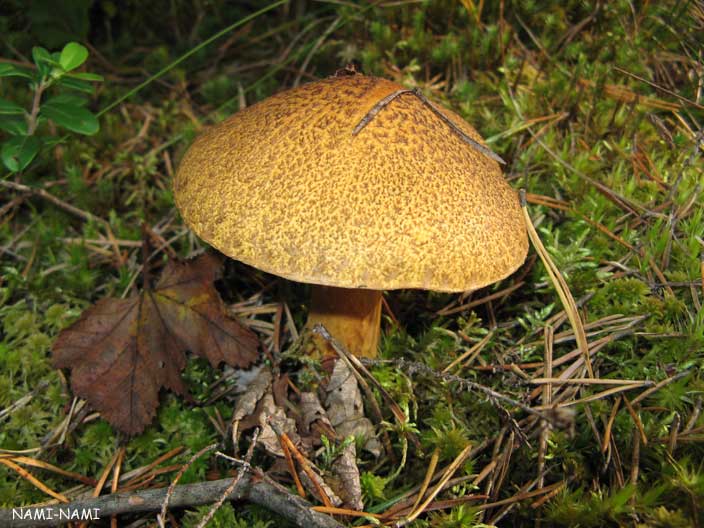
The summer in Estonia was very hot and very dry, seriously affecting the wild mushroom harvest this year. Althought the last few weeks have seen some rain, we weren't too optimistic when we drove to K.'s secret forest last Sunday. However, after just a few hours in the forest, I had nevertheless amassed a rather respectable pile of mushrooms. As you can see on the top picture, I collected some grogers (Lactarius deterrimus), woolly milk caps (Lactarius torminosus), ugly milk-caps (Lactarius turpis), tiny puffballs (Lycoperdon perlatum), orange-capped boletes (Leccinum aurantiacum), gypsy mushrooms (Rozites caperata), russula mushrooms, and many more. I, for certain, was pleased with my beautiful and colourful bounty.


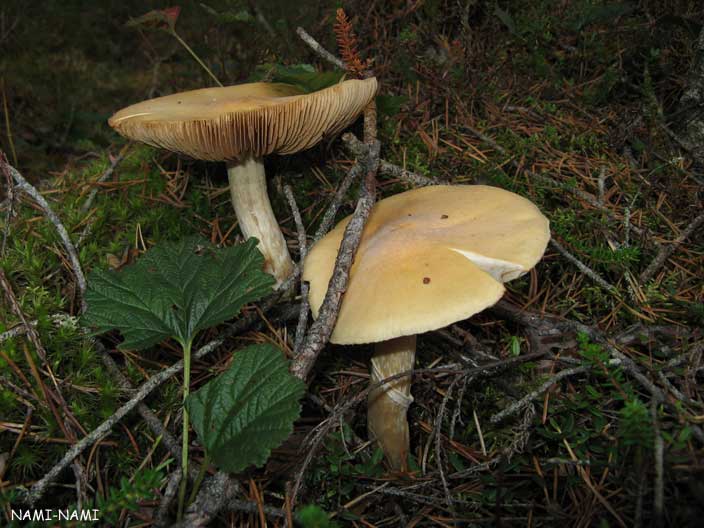

 Here's a picture of me picking up another rufuous milkcap (Lactarius rufus) - a delicious mushroom that is poisonous when eaten raw, edible when par-boiled couple of times and turned into a sauce, and very delicious when pickled. If you click on the picture to enlarge, you can try to see how many other mushrooms can you spot.
The gypsy mushrooms were simply fried in butter, seasoned with basil and eaten for lunch with mashed potatoes straight after getting home - such a fragrant mushroom, with a beautiful flavour and slightly meaty texture. The various boletes and puffballs were pan-fried, mixed with some cream cheese and garlic and used as a topping for a earthy and rustic mushroom quiche on the following day (I used the same rye flour crust that I use for salmon and cream cheese canapés). And the milkcaps and russulas were par-boiled and pickled, to be consumed as condiment and garnish during winter (like in this salad cocktail).
I'll be back in that very forest for some more mushrooms and cranberries next month. Cannot wait!
Disclaimer: All photos here were taken by my personal photographer, K. His pictures will be featuring regularly on my blog from now onwards, and copyright is all mine;)
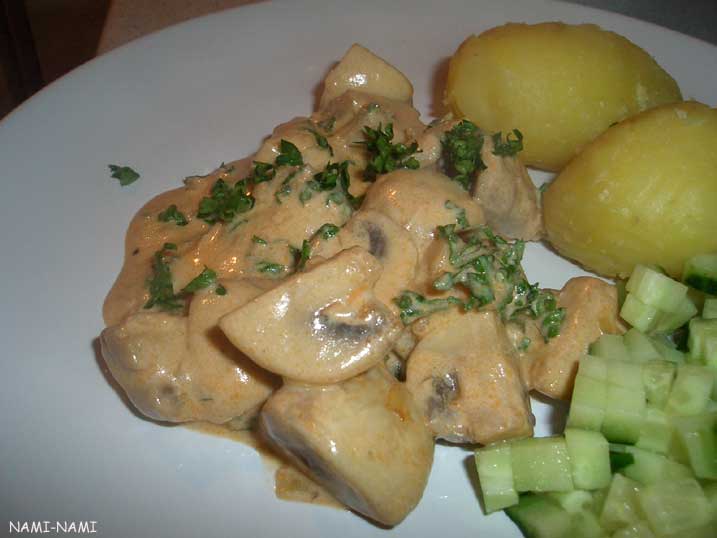
This is another mushroom recipe in my evergrowing mushroom repertoire. It is a lovely quick dish to serve during the week or whenever I am peckish for mushrooms (this happens surprisingly often), but not in the mood of making mushroom quiches, salads, soups or roasting mushrooms with carrots. I found the recipe on the reverse of a paper bag provided by Tesco for packing their mushrooms in - it must have been when I first arrived in Edinburgh back in October 1998, and I've been making this dish regularly since then.
Mushroom stroganoff
(Seenestrooganov)
Serves 4, adapted from Tesco
~ 500 grams (chestnut) mushrooms
1 medium sized onion, finely chopped
1-2 Tbsp butter
15o ml vegetable stock
1 tsp strong & sharp mustard
1 tsp concentrated tomato puré
150 ml sour cream or crème fraîche
half a lemon
chopped fresh flatleaf parsley
Heat the butter in a large frying pan, add chopped mushrooms and finely chopped onions. Sauté on medium heat for about 10-15 minutes, until the onions have began to soften.
Add tomato puré, mustard and the stock. Bring to the boil and simmer for 5 minutes.
Remove the pan from the heat, season with salt and pepper, and gently stir in sour cream. Heat through, but don't let it boil again (this is more important with sour cream than crème fraîche, because the first can curdle easily).
Season with lemon juice, sprinkle with chopped parsley and serve with boiled (new) potatoes and some salad greens.
Mushroom stroganoff
(Seenestrooganov)
Serves 4, adapted from Tesco
~ 500 grams (chestnut) mushrooms
1 medium sized onion, finely chopped
1-2 Tbsp butter
15o ml vegetable stock
1 tsp strong & sharp mustard
1 tsp concentrated tomato puré
150 ml sour cream or crème fraîche
half a lemon
chopped fresh flatleaf parsley
Heat the butter in a large frying pan, add chopped mushrooms and finely chopped onions. Sauté on medium heat for about 10-15 minutes, until the onions have began to soften.
Add tomato puré, mustard and the stock. Bring to the boil and simmer for 5 minutes.
Remove the pan from the heat, season with salt and pepper, and gently stir in sour cream. Heat through, but don't let it boil again (this is more important with sour cream than crème fraîche, because the first can curdle easily).
Season with lemon juice, sprinkle with chopped parsley and serve with boiled (new) potatoes and some salad greens.